











Dump Truck Types Explained: How to Choose the Right Dump Truck Configuration for Your Project
Tom | Corporate Editorial Team | Published: August 3, 2026
Sourcing a used dump truck from China comes down to verifying refurbishment grade, chassis and engine paperwork, and destination-market compliance before you negotiate price, not after. This guide walks through seven checks, in sequence, that a buyer can run before committing a deposit to a factory-backed refurbisher, an independent trader, or a marketplace listing.
Set Your Spec Baseline Before You Contact Anyone
Before messaging a single supplier, write down four things: payload tier (a 30-cubic-meter mining tipper and a 20-ton municipal dump truck are not interchangeable), axle configuration (6×4 vs. 8×4 changes both price and road-legal weight in most destination markets), emission standard your country requires at import, and whether you need new, used, or professionally refurbished condition.
This step is complete when you can state your spec baseline in one sentence without a supplier’s help. If you can’t, you’re not ready to request quotes yet, because sellers will quote whatever moves their existing inventory rather than what you actually need.

Choose a Sourcing Channel You Can Verify
Not all “for sale in China” listings come from the same kind of seller. Three channel types dominate current search results, and they carry different levels of accountability.
| Channel type | Documentation provided upfront | Inspection report before deposit | Warranty terms | Export compliance support |
| Marketplace listing (Alibaba, Made-in-China style) | Photos and spec sheet only | Rarely, must be requested | Varies by individual seller, often unwritten | Buyer typically handles independently |
| Independent trader / broker | Photos plus verbal history | Sometimes, quality varies | Negotiable case by case | Limited, depends on broker’s network |
| Factory-backed refurbisher | Written spec sheet, chassis/engine numbers, service record | Available on request before shipment | Written, tied to refurbishment grade | Included as part of the sourcing service |
Compared with a typical marketplace-listing purchase, a factory-backed refurbisher is set up to issue inspection documentation before a deposit is paid, not after. That single sequencing difference is worth more to most overseas buyers than a lower headline price.
Request the Paper Trail Before You Request More Photos
Photos tell you almost nothing about mechanical condition. Ask for these five documents first:
1.Chassis number and engine number, both stamped and photographed directly on the vehicle (not just typed in a spec sheet)
2.Original registration or title history
3.Emission certificate matching the engine
4.Maintenance or refurbishment service record, if the truck has been reconditioned
5.Export compliance documentation the seller intends to provide
A seller who stalls on this request, or sends numbers that don’t match across documents, has told you something important before you’ve spent a dollar on inspection travel or third-party verification.
Verify the Refurbishment Grade Point by Point
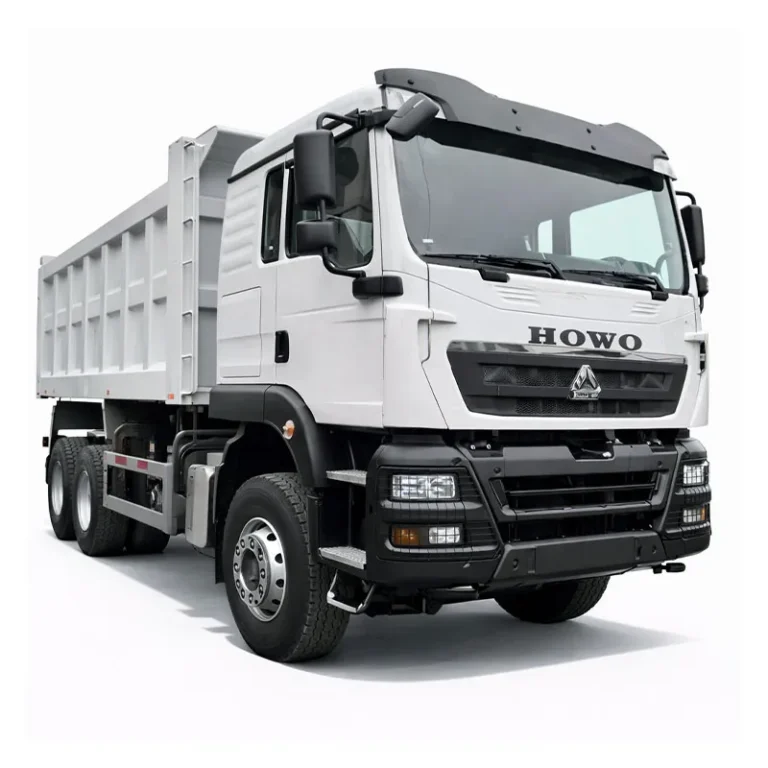
If you’re buying a professionally refurbished truck rather than an as-is used unit, “refurbished” needs to mean something specific and checkable, not a marketing label. Ask the seller to confirm, item by item: chassis and frame condition, engine and transmission rebuild scope, hydraulic and tipping system function, cab interior and electrical system, and tire and axle wear.
A common misconception worth flagging here: buyers often assume a lower odometer reading is the strongest signal of good condition. In practice, chassis and engine number mismatches, caused when a truck has passed through several intermediate resellers before reaching an export listing, are a more reliable red flag than mileage alone. A mismatch doesn’t automatically mean fraud, but it does mean the paperwork needs to be resolved before shipping, since customs and destination-market registration offices will check it.
Grading standards differ between suppliers, and there isn’t yet a single published reference a buyer can check independently against a given refurbisher’s claims. Ask directly what grading criteria the seller applies to each system on the truck, and get it in writing.
Confirm Compliance for Your Destination Market
A truck that’s road-legal in China isn’t automatically road-legal in Lagos, Karachi, or Almaty. Two things to confirm before shipping: whether the emission standard and any origin certification (such as CCC/3C marking on relevant components) satisfy your country’s import requirements, and whether the destination port has specific clearance or homologation steps for used heavy vehicles.
Quality-management certifications like ISO 9001, maintained by the International Organization for Standardization, and its Chinese counterpart GB/T 19001 describe how a manufacturing or refurbishment operation documents its processes. They’re a reasonable signal of process discipline, but they don’t substitute for confirming your specific country’s import rules, and any current certificate should be checked for validity and scope rather than taken on faith from a website claim.
Negotiate Price and Shipping Terms Together, Not Separately
Used and refurbished truck pricing depends on too many variables to quote a flat range: condition grade, mileage, engine and emission configuration, payload and body dimensions, order quantity, spare-parts package, warranty coverage, destination country, shipping method, and delivery port all move the number. Any seller who gives a single firm price before knowing your spec baseline from Step 1 is quoting blind.
Negotiate FOB or CIF terms alongside price, not after price is agreed. Shipping cost and delivery port change the effective landed cost enough that a “cheaper” truck with unfavorable shipping terms can end up costing more than a pricier one with better terms.
Lock Down After-Sales and Port Clearance Support Before You Wire a Deposit
Two things buyers frequently leave until after payment, and shouldn’t: after-sales support availability in their region, and who handles destination-port clearance paperwork. Overseas 4S-style service, covering sales, storage, maintenance, and spare parts, is available through some China-based exporters in selected markets, though the specific number and location of service points should be confirmed directly with the supplier rather than assumed from general marketing claims.
Ask specifically: what happens if a part fails in month three, and who is responsible for destination-country customs and port clearance paperwork. Get the answer in writing before the deposit, not after.
Where a Factory-Backed Supplier Fits Into This Process
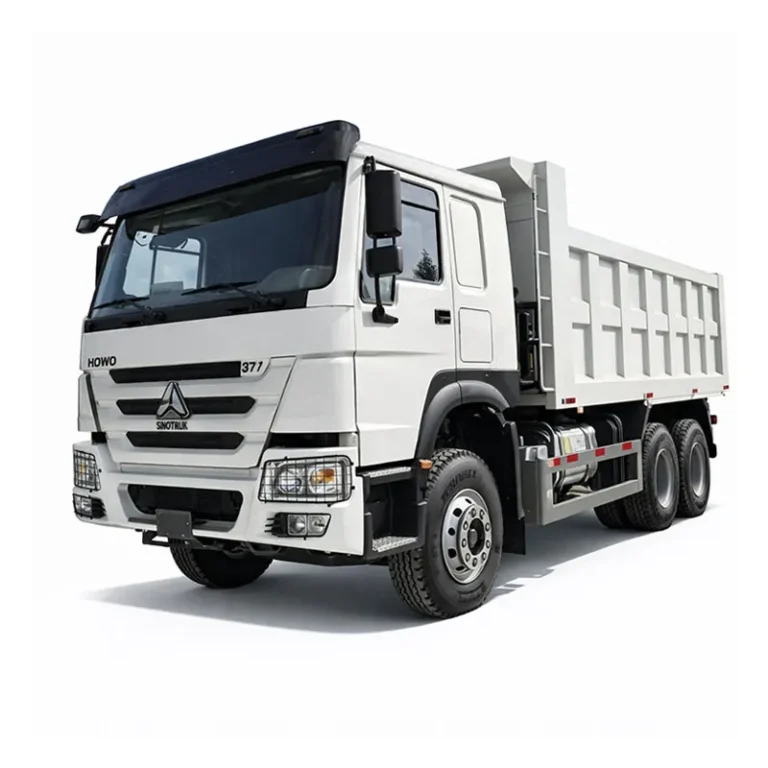
All Life Cycle, a China-based heavy-duty truck exporter and subsidiary of Shandong Juxin Special Purpose Vehicle Manufacturing Co., Ltd., sources new, used, and professionally refurbished trucks built on Sinotruk HOWO, Shacman, FAW, and other Chinese commercial vehicle platforms. The manufacturing relationship traces back to 2006, and current capacity spans more than 100 models across five major product series, with annual special-vehicle modification capacity above 12,000 units.
For buyers following the steps above, a factory-backed structure means the documentation in Step 3 and the grading detail in Step 4 come from the same organization that built or reconditioned the vehicle, rather than being reconstructed after the fact by an intermediate reseller. Pricing still follows the same rule as Step 6: it’s quotation-based, driven by the same variables (condition, configuration, destination, shipping method) rather than a fixed catalog price, so a direct quote request is the next step rather than a published number.
Buyers can reach the sourcing team by phone or WhatsApp at +86 176 8660 0717, or by email at [email protected].
FAQ
Q: What’s the typical price range for a used or refurbished dump truck from China?
A: Price depends on condition grade, engine and emission configuration, payload, order quantity, and destination shipping terms. There isn’t a single fixed range that applies across configurations; request a quotation with your spec baseline (Step 1) to get an accurate figure.
Q: How is a “professionally refurbished” truck different from a plain used truck?
A: In principle, a refurbished truck has gone through documented work on specific systems (chassis, engine/transmission, hydraulics, cab, tires) before resale, while a plain used truck is sold largely as-is. In practice, the label is only as meaningful as the documentation behind it, so ask the seller to confirm grading criteria system by system.
Q: Do I need to worry about emission standards when importing?
A: Yes. The emission standard on the truck needs to match what your destination country accepts for import and registration, and this should be confirmed before shipping, not after arrival.
Q: What’s the minimum order quantity for exporters selling to overseas buyers?
A: This varies by supplier and should be confirmed directly; some marketplace listings show single-unit minimums, while factory-backed export arrangements may structure minimums differently depending on shipping method.
Q: Who handles port clearance at the destination?
A: This should be settled in Step 7, before payment. Some suppliers offer clearance support as part of the sourcing arrangement; others expect the buyer’s own customs broker to manage it. Confirm this explicitly rather than assuming either way.
Get a Quote
We will reply you within 24 hours. If for urgent case, please add WhatsApp/WeChat: +86 17686600717,. Or call +86 17686600717 directly.
*We respect your confidentiality and all information are protected.
We will only use your information to respond to your inquiry and will never send unsolicited emails or promotional messages.