











Custom Dump Trucks for Sale: Configuring a Mixed Fleet
Tom | Corporate Editorial Team, ALL LIFECYCLE | Published August 24, 2026
Configuring a custom dump truck order means specifying condition, axle configuration, and any special-purpose upper-body equipment for each vehicle in a fleet, then consolidating certification, spare-parts, and shipping details into one procurement package. For project buyers ordering multiple vehicle types together, that consolidation is what actually saves time versus separate orders.
What Counts as a “Custom” Dump Truck Order?
Most of the customization in a mixed-fleet order happens above the chassis rather than in the base truck itself: tank capacity, mixer drum size, crane reach, or refrigeration specs layered onto a standard rigid platform. A “custom” order can be a single dump truck built to a specific payload and drive configuration, or it can be a mixed fleet — several vehicle types ordered together for one project, sharing a certification package and a delivery timeline instead of being sourced piecemeal from different vendors.
Configuring a Mixed-Fleet Order: Step by Step
Map the vehicle mix to the project scope. List how many dump trucks the project needs, in which axle configuration, plus any special-purpose vehicles — tankers, mixers, cranes, refrigerated units — required alongside them. If the scope calls for true off-road articulated haulers, flag that early: ALL LIFECYCLE’s current lineup centers on rigid 6×4/8×4 trucks, and articulated dump trucks sit outside it as a separate category.
Decide condition per vehicle type. A mixed fleet does not have to be uniform in condition. Project procurement teams commonly pair new units for primary haul trucks with professionally refurbished units for support vehicles, which spreads budget across the order without dropping every unit to the same tier.
Set axle and drive configuration for each dump truck. Match 6×4 or 8×4 to expected payload and site conditions rather than defaulting to the larger option — more axles support more body length and weight distribution, but the configuration that fits a quarry haul road is not always the one that fits an urban site with tighter turning requirements.
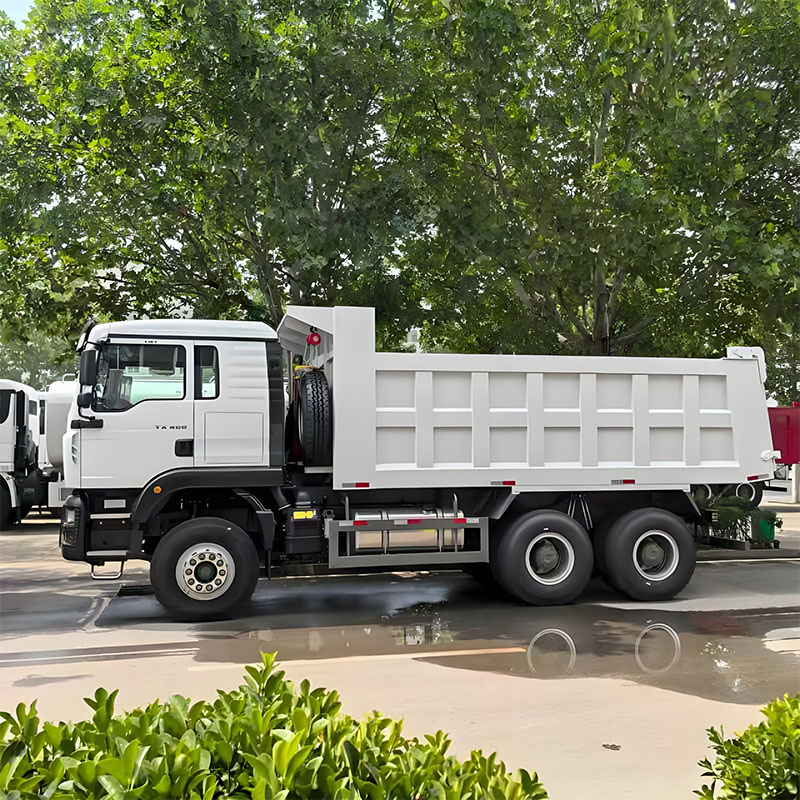
Specify special-purpose upper-body equipment for non-dump-truck units. This is where most of the real customization happens:
| Equipment type | Typical project use | What varies most |
| Tank | Water supply, dust suppression, fuel delivery | Tank capacity, interior lining material |
| Mixer | On-site concrete delivery | Drum capacity, mixing speed |
| Crane | Material handling, equipment placement | Boom reach, lift capacity |
| Refrigeration unit | Cold-chain or perishable project supply | Insulation rating, temperature range |
Confirm certification and inspection requirements for the destination country. Import rules differ by market and by vehicle type, so this step should happen before production, not after the fleet is built — see our guide to diesel dump truck emission and import standards for how destination-country rules typically work.
Request one consolidated quote covering the full mix. Order quantity, spare-parts package, and warranty coverage all move the final number, and pricing a mixed order as a single package is usually more efficient than negotiating each vehicle type separately.
Confirm shipping method, delivery port, and lead time for each vehicle type. Custom-body units — a crane truck or a mixer, for example — typically take longer to build than a standard dump truck. A mixed order can ship as one consolidated shipment once every unit is ready, or in batches as each vehicle type clears production; decide which one fits the project schedule before committing to a single delivery date for the whole fleet.
Review the final configuration before production begins. Check that vehicle count, per-unit spec sheet, certification package, and delivery schedule all still match the project scope from step 1 — mixed orders drift more easily than single-vehicle orders simply because there are more moving parts to track.
What ALL LIFECYCLE’s Mixed-Fleet Capability Actually Covers
The company has an annual special vehicle modification capacity of over 12,000 units, covering five major product series and more than 100 vehicle models.That range is what supports single-order requests combining dump trucks with tankers, mixers, cranes, or refrigerated units, rather than routing each vehicle type through a different supplier. New trucks, professionally refurbished trucks, and special-purpose builds can be ordered together as one procurement package rather than three separate ones.
ALL LIFECYCLE’s manufacturing partner also states GB/T 19001-2008 and ISO 9001:2008 quality management system certification, aligned with the ISO 9001 standard maintained by the International Organization for Standardization — a process meant to hold consistent whether the build is a standard dump truck or a customized upper-body unit.
The Misconception: A Mixed Fleet Doesn’t Need a Mixed Set of Chassis
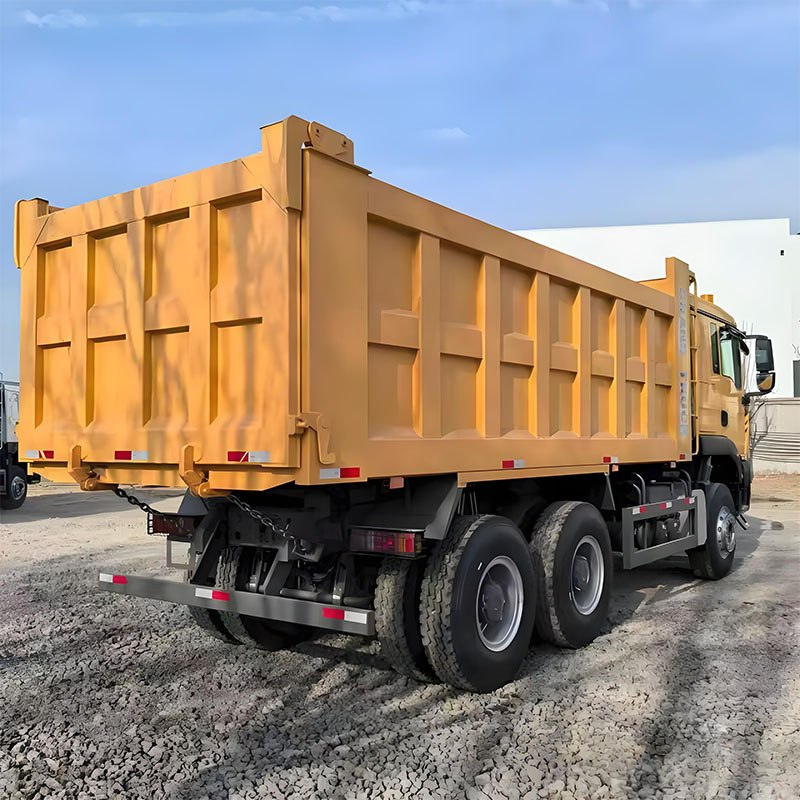
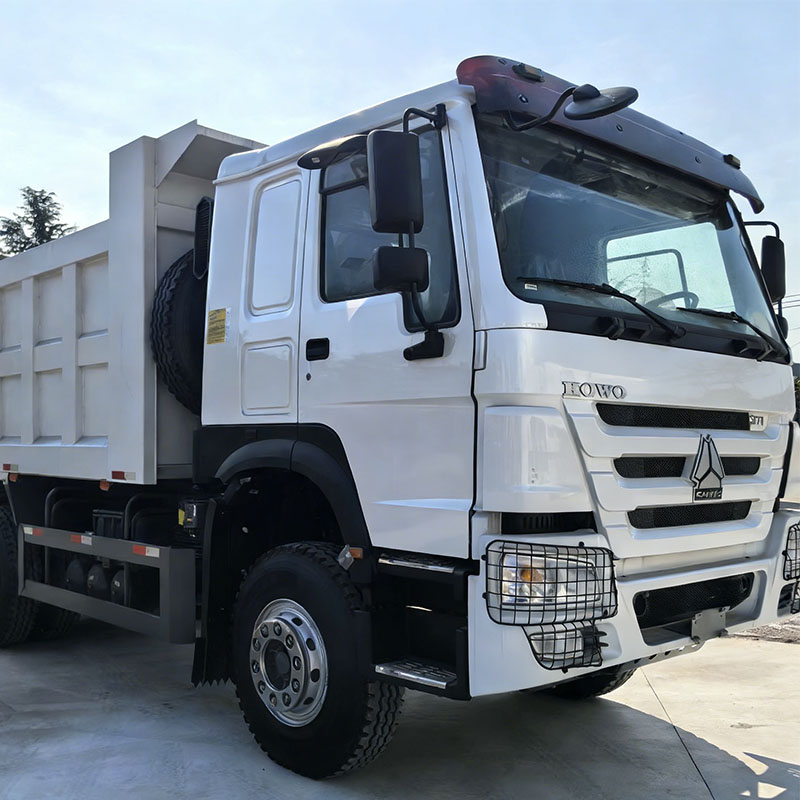
Buyers configuring their first mixed-fleet order sometimes assume customization means a different chassis platform for every vehicle type in the fleet. In practice, keeping the chassis platform standardized — the same HOWO or Shacman base, the same 6×4/8×4 driveline — across dump trucks and other special-purpose units is what keeps a mixed fleet serviceable once it is in the field. It means shared spare parts, one driver-training curriculum, and one maintenance procedure, even though the upper-body equipment on a dump truck, a tanker, and a mixer has almost nothing in common. Customization belongs on the upper body far more often than it belongs on the base vehicle, unless the project genuinely needs a different vehicle class entirely.
Trade-Offs and Pricing on a Custom Order
Consolidating a mixed fleet through one manufacturer-backed supplier means one certification package, one spare-parts relationship, and a consistent chassis platform across units — real advantages once the fleet is running, not just at the point of purchase. The trade-off shows up in scheduling: a single custom unit with a longer build time can hold up the shipping timeline for an entire order if every vehicle is expected to ship together. Splitting the shipment into batches avoids that bottleneck but adds coordination and, in some cases, separate freight costs per batch.
Price on a custom or mixed-fleet order depends on the new/refurbished mix, axle and drive configuration, the specific upper-body equipment and its capacity, order quantity, spare-parts package, warranty coverage, and destination-country certification and shipping requirements. Because that list of variables is long, ALL LIFECYCLE quotes mixed-fleet orders as a package rather than publishing a per-vehicle price list — request a quote with your project’s vehicle mix to get a specific figure.
FAQ
Q: What is a mixed-fleet order?
A: A mixed-fleet order combines several vehicle types — dump trucks alongside tankers, mixers, cranes, or refrigerated units, for example — into one procurement package with a shared certification and delivery process, instead of sourcing each vehicle type separately.
Q: Can I mix new and refurbished trucks in one order?
A: Yes. Project procurement teams commonly pair new units for primary haul trucks with refurbished units for support vehicles to manage budget across the fleet without lowering every unit to the same condition tier.
Q: Does a custom dump truck cost more than a standard one?
A: It depends on what’s being customized; upper-body equipment, order quantity, and destination certification requirements affect price more than the base chassis does, so ALL LIFECYCLE quotes each configuration individually rather than publishing a flat premium.
Q: How long does a custom or mixed-fleet order take to build?
A: Build time varies by vehicle type — standard dump trucks typically move faster through production than custom upper-body units like cranes or mixers — so confirm lead time per vehicle type before committing to one delivery date for the whole order.
Q: Can ALL LIFECYCLE include articulated dump trucks in a mixed-fleet order?
A: No. ALL LIFECYCLE’s current lineup centers on rigid 6×4/8×4 dump trucks; articulated dump trucks are a separate vehicle category outside the current catalog, so a mixed-fleet request that specifically needs ADTs would need to be sourced elsewhere for that portion.
Get a Quote
We will reply you within 24 hours. If for urgent case, please add WhatsApp/WeChat: +86 17686600717,. Or call +86 17686600717 directly.
*We respect your confidentiality and all information are protected.
We will only use your information to respond to your inquiry and will never send unsolicited emails or promotional messages.