











What Is a Semi Tractor Truck? Types, Configurations, and Regional Terms Explained
What Is a Semi Tractor Truck?
A semi tractor truck is the engine-and-cab unit — also called a truck tractor, tractor head, or tractor unit depending on where you’re reading this — that pulls a separate semi-trailer using a fifth-wheel coupling. It carries no cargo of its own; axle configuration, cab style, and coupling height determine which trailers and payloads it can legally and safely haul.
That distinction trips people up more than it should. A dump truck or a straight cargo truck carries its load on the same chassis as the cab. A tractor truck doesn’t. Its entire job is to sit in front of a trailer, take on part of the trailer’s weight through the fifth wheel, and provide the engine, transmission, and steering to move the whole combination. Detach the trailer and the tractor is still a complete, drivable vehicle — just one with nowhere to put cargo.
Most of what shows up when you search this term is a dictionary definition. That’s fine for a crossword clue. It’s not much use if you’re actually trying to figure out which configuration fits a construction project in Lagos, a logistics contract in Kazakhstan, or a mixed fleet expansion for a distributor in Southeast Asia — which is the more common reason someone searching from an export-market angle ends up here.
The Many Names for the Same Vehicle
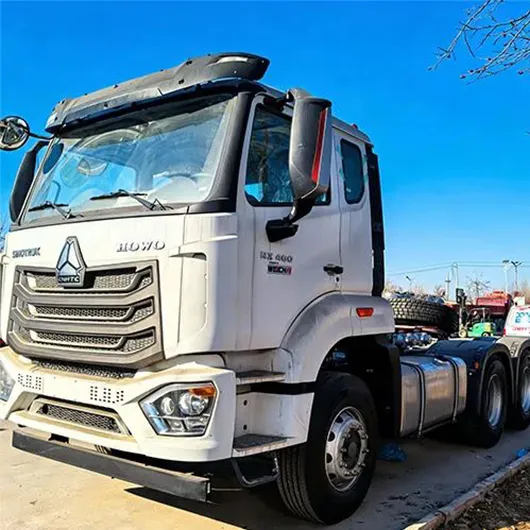
Search data shows people typing “tractor truck,” “truck tractor,” “tractor trailer truck,” and “tractor head truck” for what is functionally the same vehicle, and that’s not an accident of bad spelling. It reflects genuinely different regional habits.
- North America: “tractor,” “semi,” “tractor-trailer,” “18-wheeler” — the trailer is usually implied.
- UK and Ireland: “articulated lorry” or “artic,” emphasizing the pivoting joint between the two halves.
- Australia: “prime mover” for the tractor unit itself.
- Africa, the Middle East, and much of Southeast Asia: “tractor head” is common in commercial listings and import documentation — it’s the term you’ll see most often in these markets’ English-language trade correspondence.
None of this changes the vehicle’s mechanics. It changes what you should type into a search bar or a customs form so you’re not filtered out of relevant results by wording alone. Unlike the generic glossary entries that dominate most searches on this term, that’s the part actually worth knowing if you’re sourcing rather than just curious.
Conventional Cab or Cab-Over? Two Very Different Front Ends
Is a “tractor” always the same shape? No — and this is where a lot of first-time buyers assume more universality than actually exists.
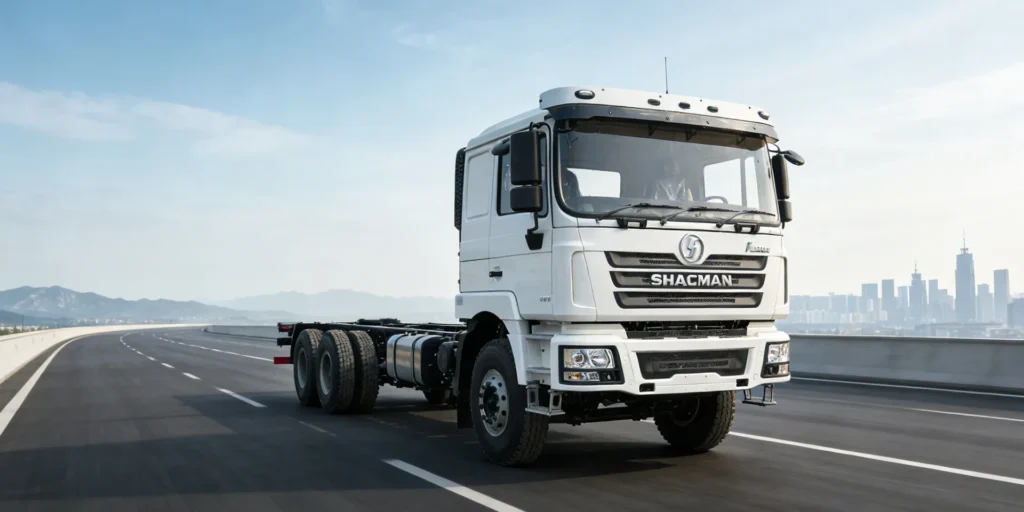
Conventional (bonneted) tractors put the engine ahead of the cab, the way most North American trucks are built. Cab-over (forward-control) tractors put the driver almost directly above the front axle, with the engine underneath or behind the cab — the dominant layout across Europe and most of Asia.
Neither is objectively better. Each trades off differently:
| Factor | Conventional Cab | Cab-Over |
| Overall Combination Length | Longer for the same trailer | Shorter—more trailer length fits within a given legal limit |
| Frontal Crash Buffer | More structure ahead of the driver | Driver sits closer to the point of impact |
| Turning Radius in Tight Sites | Wider | Tighter; easier in congested yards or on narrow roads |
| Engine Access for Maintenance | Tilt the hood | Tilt the entire cab |
| Regional Prevalence | North America | Europe and most of Asia; common on export platforms from Chinese manufacturers |
If your destination market enforces strict overall-length limits — common across parts of Africa and the Middle East — a cab-over layout usually wins on usable trailer length. If your priority is driver comfort on long domestic hauls and parts availability follows a North American supply chain, conventional cabs still have a real advantage. Neither answer is “correct” without knowing the route and the regulation it runs under.
Axle Configurations: 4×2, 6×2, and 6×4
The axle notation you’ll see on a spec sheet looks cryptic until you know it’s just two numbers: total wheels-on-the-ground axles, then how many of those are powered.
- 4×2: Two axles, one driven. Common on lighter, shorter-haul tractors where maximum traction isn’t the deciding factor.
- 6×2: Three axles, one driven — the third axle is there mainly for legal weight distribution, not pulling power.
- 6×4: Three axles, two driven. This is the standard choice for heavier freight, hilly terrain, or routes where traction matters more than fuel economy.
A common misconception is that more drive axles is simply “better.” It isn’t — it’s a trade-off. A 6×4 configuration adds traction and load capacity, but it also adds tare weight, tire cost, and a wider turning circle compared with a 6×2 running the same trailer. For a contractor hauling aggregate on unpaved mine access roads, that trade is obviously worth it. For a long-haul highway operator moving light, high-cube freight on paved roads, the extra drive axle mostly adds cost without adding usable capability.
Where ALL LIFECYCLE’s 6×4 Tractor Truck Fits
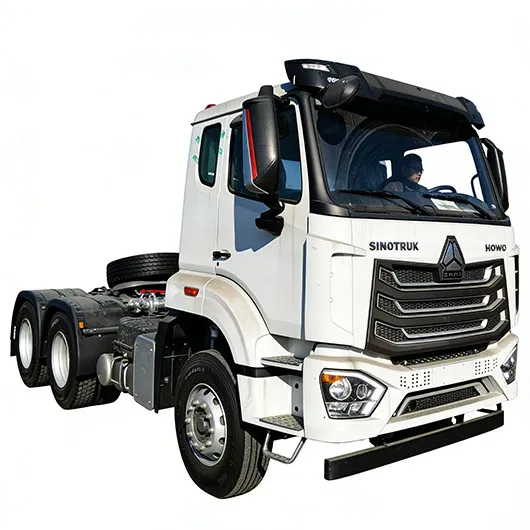
Within ALL LIFECYCLE’s current lineup, the confirmed tractor truck offering is a 6×4 platform positioned for infrastructure and long-distance transport work — road, bridge, and industrial park construction projects that need to move materials both around a site and over highway distances. It’s typically specified alongside flatbed or low-bed trailers and is sold as part of mixed fleets that combine new and refurbished units, which is the same approach used for the company’s 6×4 and 8×4 dump trucks on the same projects.
That solution-level description is what’s currently confirmed. Detailed technical specifications — horsepower rating, GVW, wheelbase options, and engine displacement — are not yet published for this platform, so treat any numbers you see elsewhere as unverified until you request a formal spec sheet.
What a Buyer Needs to Confirm Before Ordering
Not every configuration variant gets specified the same way by every manufacturer, and this is where a generic explainer stops being useful and a direct conversation with the supplier starts mattering.
Three things worth confirming before you commit to a sourcing plan:
- Cab type availability. Day-cab-only versus sleeper-equipped variants aren’t interchangeable for every route, and not every platform is offered in both.
- Transmission options. Manual remains standard on many China-manufactured export platforms; automatic or automated-manual availability should be confirmed per model rather than assumed.
- Axle count and configuration. As covered above, single-axle, 6×2, and 6×4 variants serve different jobs — confirm which one the quoted unit actually is, not just the general product category.
ALL LIFECYCLE’s manufacturing operation traces back to 2006, roughly two decades of production history, and its listed certifications include GB/T 19001-2008 and ISO 9001:2008 quality management system certification — both aligned with the International Organization for Standardization’s ISO 9001 framework for quality management systems. Certificate scope and current validity are worth verifying directly with the supplier rather than taken as a permanent, unchanging credential, since certifications carry renewal cycles.
As with the rest of ALL LIFECYCLE’s range, tractor truck pricing is quotation-based rather than published as a fixed list price — it depends on axle configuration, cab type, new versus refurbished condition, order quantity, and destination shipping costs. If you need a number to plan around, request a quote rather than relying on a generic figure from an unrelated market.
For buyers combining tractor trucks with other vehicle types in one order, ALL LIFECYCLE’s mixed-fleet procurement guide covers how new and refurbished units get combined into a single sourcing plan.
Why the Terminology Matters When You’re Importing
Get the vehicle type wrong on an import document or a supplier inquiry, and the mismatch surfaces later — during customs classification, or when the trailer you already own turns out to need a different fifth-wheel height than the tractor you just bought. This is less a semantic issue and more a practical one: destination-country regulations on axle load limits, overall length, and emissions tier frequently distinguish tractor units from rigid trucks in ways that affect registration and compliance, not just terminology.
Confirming the exact configuration — cab type, axle count, coupling height — against your destination market’s requirements before placing an order avoids a rework that costs more than the extra week of due diligence would have.
FAQ
Is a “truck tractor” the same thing as a “semi tractor truck”?
Yes. “Truck tractor,” “tractor truck,” and “semi tractor truck” all refer to the same vehicle — the cab-and-engine unit that pulls a semi-trailer. The variation is regional phrasing, not a different product.
What’s the difference between a tractor truck and a straight (rigid) truck?
A tractor truck carries no cargo itself; it pulls a detachable semi-trailer via a fifth-wheel coupling. A straight truck carries cargo on the same chassis as the cab, with no detachable trailer involved.
What does it mean if a tractor truck is running “bobtail”?
It means the tractor is being driven without a trailer attached — typically while repositioning between loads. It’s a separate operational term from the vehicle types covered here; we’ll cover it in more depth in an upcoming glossary piece.
Can a 6×4 tractor truck be paired with any trailer type?
Generally yes for flatbed and low-bed trailers, which is the common pairing for infrastructure and long-distance transport projects — but coupling height, kingpin setting, and legal weight distribution should be checked against the specific trailer before ordering.
Get a Quote
We will reply you within 24 hours. If for urgent case, please add WhatsApp/WeChat: +86 17686600717,. Or call +86 17686600717 directly.
*We respect your confidentiality and all information are protected.
We will only use your information to respond to your inquiry and will never send unsolicited emails or promotional messages.