










Camión de succión de aguas residuales de vacio pesado HOWO de Sinotruk: Una guía B2B para elegir el camión cisterna adecuado
Buying the wrong sewage truck can lead to weak suction, tank corrosion, slow unloading, and costly downtime. That is a big problem for contractors and municipal fleets. The right Sinotruk heavy duty vacuum sewage suction truck solves this with stable chassis strength, reliable vacuum performance, and export-ready support.
A Sinotruk vacuum sewage suction truck is a purpose-built vehicle for collecting and transporting sewage, sludge, and industrial waste liquids. For most B2B buyers, the best choice depends on tank capacity, drive type, road conditions, anti-corrosion design, and whether the supplier can support customization, export paperwork, and after-sales service.
What Is a Sinotruk HOWO Heavy Duty Vacuum Sewage Suction Truck?
A Sinotruk HOWO sewage truck is more than a simple tank truck. It is a specialized suction truck built to collect waste water, sludge, septic waste, and mixed liquid waste from municipal, industrial, and construction sites. In practical use, buyers often call it a sewage suction truck, vacuum truck, vacuum tanker, sewage suction tanker truck, or even a fecal suction truck, depending on the job and local market language.
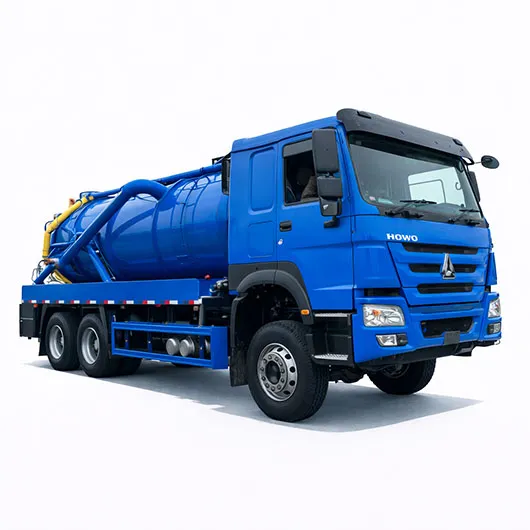
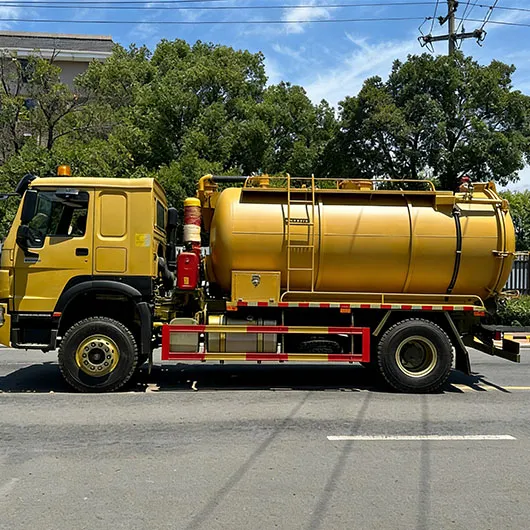
All Lifecycle presents this model as a Sinotruk HOWO7 sewage suction truck for demanding sanitation work. It is built on a reinforced HOWO7 platform and is designed for continuous suction, transport, and discharge in municipal, industrial, and construction environments. It features both leak-proof storage tanks, a two-stage vacuum system, cab control operation, overflow protection, and internal anti-corrosion treatment of the tank body.
From a buyer’s point of view, this matters because a real heavy duty vacuum sewage truck must do three things well: pull waste fast, carry it safely, and survive harsh working media. When a truck fails at any one of these, the result is downtime, cleanup cost, and frustrated operators.
Why Do Many Buyers Prefer a HOWO 6×4 Sewage Truck?
In our experience, many overseas buyers start with one question: should I choose a 4×2, 6×4, or 8×4 layout? For a wide range of municipal and industrial work, howo 6×4 is often the sweet spot. It gives better load support than a light truck platform, yet stays more flexible than a larger 8×4 unit in mixed road conditions.
The All Lifecycle product page lists this sewage model as 6×4 and positions it for stable transport under heavy suction loads. That makes sense. A truck 6×4 layout is often better for larger tanks, rougher site access, and longer daily working cycles. It also helps when operators face uneven construction roads, rural lanes, or job sites where payload and traction both matter.
For some projects, a sinotruk howo 4×2 or other 4×2 sewage layout may still be useful. A 4×2 vacuum unit can work well for lighter duty city service, tighter turning space, and lower-capacity tasks. On the other hand, a sinotruk howo 8×4 may suit very large-capacity operations where route width, axle limits, and site conditions allow it. The smartest buyers do not just ask for the cheapest truck for sale. They match the truck to the real duty cycle.
How Do the Tank, Vacuum Pump, and Coating System Affect Service Life?
A vacuum sewage suction vehicle lives or dies by the tank and the suction system. The chassis gets attention, but the tank is where many long-term maintenance costs begin. Thin steel, poor weld quality, or weak coating will cause trouble fast, especially when the media is acidic, alkaline, abrasive, or mixed with solids.
All Lifecycle states that this model uses a high-strength carbon steel tank with seamless welding, pressure testing, and a leak-proof structure. It also highlights inner epoxy anti-corrosion coating plus electrophoresis treatment. That combination matters because sewage, sludge, and industrial liquid waste are not gentle materials. Good anti-corrosion work is one of the biggest differences between a short-life vacuum tank truck and a dependable sewage suction tank truck.
The vacuum pump is just as important. Strong suction is not only about headline power. Buyers should ask about real suction depth, operating stability, spare parts access, and how well the suction pump matches the tank volume. A truck with a big tank but weak pump setup becomes slow in real operation. That is why a balanced pump truck system is usually better than an overbuilt tank with underbuilt suction hardware.
Which Jobs Are Best Suited to a Sewage Suction Truck?
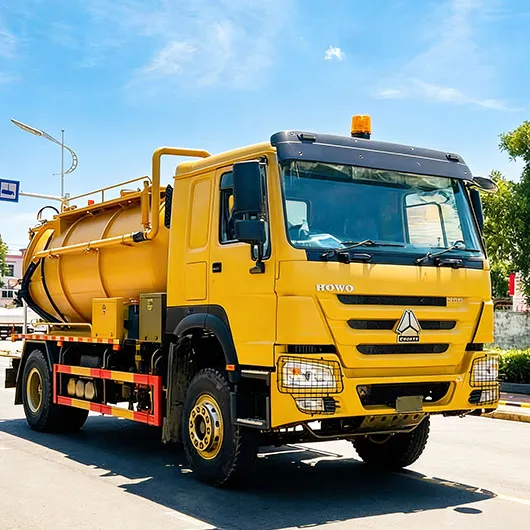
A well-matched vehicle sewage solution can serve many industries. The featured All Lifecycle model is promoted for municipal sewage collection, industrial waste liquid treatment, construction site sludge cleanup, and environmental sanitation work. It is also presented as suitable for long-term fleet deployment.
That application range is important for importers and distributors. It means one tanker truck platform can serve multiple customer groups:
- Municipal sanitation departments
- Sewer and drainage maintenance contractors
- Industrial park service providers
- Construction and excavation companies
- Septic service operators
- Waste management and public works fleets
In real procurement, many buyers also search phrases like septic truck, suction truck septic, septic tank, sewer cleaning, sewage cleaning, waste collection vehicle, and flushing vehicle sewage suction. These variations reflect local buying language, but they usually point back to the same need: a durable truck sewage solution that can handle dirty, unpredictable material day after day.
New Truck, Used Sewage Suction Truck, or Mixed Fleet: Which Option Is Smarter?
This is where All Lifecycle’s business model becomes especially useful. The company positions itself as a supplier of both new and refurbished trucks, not only one or the other. It serves global B2B buyers with new trucks and high-quality refurbished trucks, backed by manufacturing support and export services.
For sewage projects, the right buying model depends on budget and fleet strategy:
- Brand-new sewage truck: best for long-term municipal contracts, strict compliance needs, and buyers who want the latest emission and configuration standards.
- Used sewage suction truck: best for cost-sensitive markets, short-term project demand, or buyers building a trial fleet.
- Mixed fleet: often the smartest solution for distributors and contractors who want to balance upfront cost with operating performance.
I like mixed fleet planning because it reflects how real projects work. A contractor may need one new flagship Sinotruk HOWO unit for image and core tasks, plus one or two lower-cost support units. That is a more practical path than buying every vehicle at the highest possible specification.
What Should You Ask a Supplier Before You Buy?
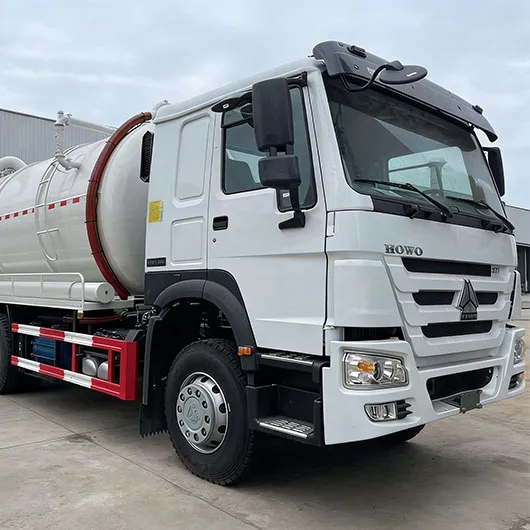
A reliable supplier should welcome detailed questions. If the answers are vague, that is your warning sign. Buyers often focus too much on factory price or factory sale and not enough on the items that affect operating cost.
Here are the questions I would always ask before placing an order:
- What is the real truck material and thickness?
- ¿Se ha probado la presión del tanque y se ha comprobado si hay fugas?
- ¿Qué marca o estándar de bomba de vacío se utiliza?
- ¿Qué profundidad de succión puede mantener el camión en condiciones de trabajo?
- ¿Qué incluye el sistema anticorrosión?
- ¿Se puede configurar la unidad para LHD o RHD?
- ¿Qué piezas de repuesto y soporte remoto están disponibles?
- ¿Qué documentos de exportación vienen con el camión?
Esto es aún más importante cuando los compradores buscan términos como fábrica de camiones de succión de aguas residuales, fábrica en China, directo de fábrica y comprar aguas residuales. Solo un precio bajo no es una estrategia. La mejor estrategia es encontrar un proveedor que pueda explicar configuración, inspección, envío y soporte en términos comerciales claros.
¿Por qué son importantes el soporte de exportación y el servicio respaldado por la fábrica?
Muchos compradores no fallan en la selección del producto. Fallan en la entrega, la documentación o la planificación del servicio postventa. Por eso, el soporte de exportación es un problema comercial serio, no solo un complemento de servicio.
El Todo el Ciclo de Vida La página de inicio presenta a la empresa como el brazo de exportación de propiedad total de Shandong Juxin Special Purpose Vehicle Manufacturing y dice que combina la fuerza de producción a nivel de fábrica con servicios de exportación. El sitio también indica que ofrece selección de modelos, personalización, coordinación de envíos y soporte postventa para clientes B2B globales. La página del producto añade que puede proporcionar orientación técnica, asistencia con piezas de repuesto y soporte en configuración basado en el mercado de destino.
Ese tipo de estructura es valiosa para importadores, distribuidores, contratistas mineros y compradores municipales. Un equipo respaldado por la fábrica suele ser mejor para resolver problemas reales como la configuración de la carrocería, el emparejamiento de ejes, el ajuste de cumplimiento y las piezas de repuesto. También facilita la comunicación cuando el proyecto involucra más de un tipo de camión, como combinar un camión de carga, un camión de basura, un camión de limpieza o un camión de succión en un paquete de flota.
Un caso B2B simple de ejemplo
Un comprador municipal puede no necesitar solo un camión de aguas residuales. El proyecto real puede requerir:
- un camión de succión de aguas residuales
- una unidad de soporte de limpieza de carreteras o de vacío
- un vehículo de servicio o soporte
- piezas de repuesto y formación para operadores
Aquí es donde un exportador respaldado por la fábrica se vuelve más útil que un simple intermediario. El valor no es solo el camión. El valor es la solución de flota.
¿Por qué es tan popular la plataforma Sinotruk HOWO para compradores en el extranjero?
Todo el Ciclo de Vida se centra en gran medida en los productos Sinotruk y Shacman en camiones volquetes, cabezas de tractores, camiones de carga y vehículos especiales. Para muchos compradores en el extranjero, Sinotruk HOWO es atractivo porque se sitúa en una zona media práctica: fuerte capacidad de trabajo, amplio reconocimiento en el mercado y gran familiaridad con las piezas.
Eso importa en las flotas de saneamiento. Una unidad de aguas residuales puede trabajar todos los días en condiciones sucias, repetitivas y sensibles al tiempo. Los compradores a menudo prefieren una plataforma que ya saben cómo mantener. Esa es una razón por la cual términos de búsqueda como howo, sinotruk, sinotruk chino, howo 6×4, camión diésel y camión de succión siguen apareciendo en la investigación comercial y la planificación de SEO.
Desde nuestro lado, la lección mayor es simple: la mejor solución sinotruk howo no es la que tiene el folleto más agresivo. Es la que se ajusta a la ruta, tipo de desecho, horas de trabajo y modelo de presupuesto del comprador. Cuando esas partes se alinean, el camión se convierte en una herramienta de beneficio en lugar de un dolor de cabeza de mantenimiento.
Preguntas Frecuentes
¿Es un camión de succión de aguas residuales Sinotruk HOWO adecuado para trabajos de alcantarillado municipal?
Sí. Está diseñado para la eliminación de aguas residuales municipales, recolección de lodo y tareas de saneamiento relacionadas. La página del producto destaca específicamente la recolección de aguas residuales y lodo municipal como una de sus principales áreas de aplicación.
¿Este camión cisterna de succión de aguas residuales puede manejar líquidos residuales industriales?
Sí, siempre que el tipo de desecho coincida con el material del tanque seleccionado, el recubrimiento y la configuración de operación. All Lifecycle posiciona este modelo para el tratamiento de líquidos residuales industriales y enfatiza la protección anticorrosión dentro del tanque.
¿Por qué se prefiere a menudo 6×4 sobre 4×2 para un camión de succión de servicio pesado?
Un diseño 6×4 generalmente proporciona mejor soporte de carga, tracción y durabilidad para un mayor volumen de tanque y rutas más difíciles. Para trabajos urbanos más ligeros, 4×2 puede ser suficiente, pero muchos compradores B2B eligen 6×4 por una mayor flexibilidad operativa.
¿Qué capacidad de tanque debo elegir?
Eso depende del volumen de desechos diario, la distancia de succión, las restricciones de la carretera y la frecuencia de los viajes. El modelo presentado se ofrece en el rango de 10–25 CBM, lo que da a los compradores la oportunidad de igualar la capacidad con la escala del proyecto.
¿Necesito un camión nuevo o un camión de succión de aguas residuales usado?
Si necesitas una larga vida útil, fuerte cumplimiento e imagen de flota unificada, un camión nuevo suele ser la mejor opción. Si tu proyecto es sensible al costo o temporal, una unidad usada puede ser más práctica. Una flota mixta también puede ser un buen compromiso.
¿Qué debo esperar de un proveedor profesional de camiones?
Debes esperar asesoramiento claro sobre la configuración, transparencia en la inspección, apoyo con documentos de exportación, coordinación de envíos y orientación postventa. All Lifecycle indica que apoya la selección de camiones, el manejo de exportaciones y el servicio continuo para compradores en el extranjero.
Solicitar presupuesto
Le responderemos dentro de 24 horas. Si es un caso urgente, por favor añada WhatsApp/WeChat: +86 17686600717. O llame directamente al +86 17686600717.
*Respetamos su confidencialidad y toda la información está protegida.
Sólo utilizaremos sus datos para responder a su consulta y nunca le enviaremos correos electrónicos o mensajes promocionales no solicitados.