











Construction Dump Trucks: Buying Considerations for Contractors
Choosing a construction dump truck for a project fleet means weighing configuration, certification, condition, and total cost together—not selecting the first dump truck for sale that matches your budget. This list covers ten considerations contractors frequently overlook and explains where each one can increase costs later.
1. Match the Configuration to the Job, Not the Job Site Down the Road
A 6×4 and an 8×4 construction dump truck distribute weight differently and suit different road and site conditions. The right choice depends on the material, target payload, route, terrain, turning space, and applicable axle-load regulations—not on whichever configuration happens to be available locally.
A typical 6×4 model has three axles in total and may be described as a tri axle dump truck in some markets. An 8×4 normally has four axles and may appear in searches for a quad axle dump truck for sale. However, naming conventions vary between countries, so international buyers should confirm the actual drive configuration and axle layout rather than relying only on listing terminology.
Specify the required configuration against the project’s real operating conditions before comparing dump trucks for sale. Changing from a 6×4 to an 8×4 after receiving a quote can affect the chassis, dump body, legal gross weight, tires, shipping cost, and final price.
2. Payload Capacity Doesn’t Scale Directly With Axle Count
One misconception that can cost contractors money is assuming an 8×4 automatically carries more usable payload than a 6×4 simply because it has more axles.
Payload depends on the complete vehicle specification, including:
- Gross vehicle weight rating
- Chassis and frame rating
- Axle ratings and spacing
- Suspension system
- Tire ratings
- Dump body weight and dimensions
- Système hydraulique
- Destination-country weight regulations
Additional axles mainly improve weight distribution and may allow a higher legal gross weight under certain regulations. They do not guarantee a higher payload in every market or on every route.
Two trucks with the same axle configuration can therefore have different legal and mechanical payload limits. Whether you are evaluating a standard 6×4 truck, a tri axle dump truck for sale, or a heavier four-axle configuration, confirm the manufacturer’s specifications and local road limits instead of inferring capacity from axle count.
3. New vs. Refurbished Is a Total-Cost Decision, Not a Price-Tag Decision
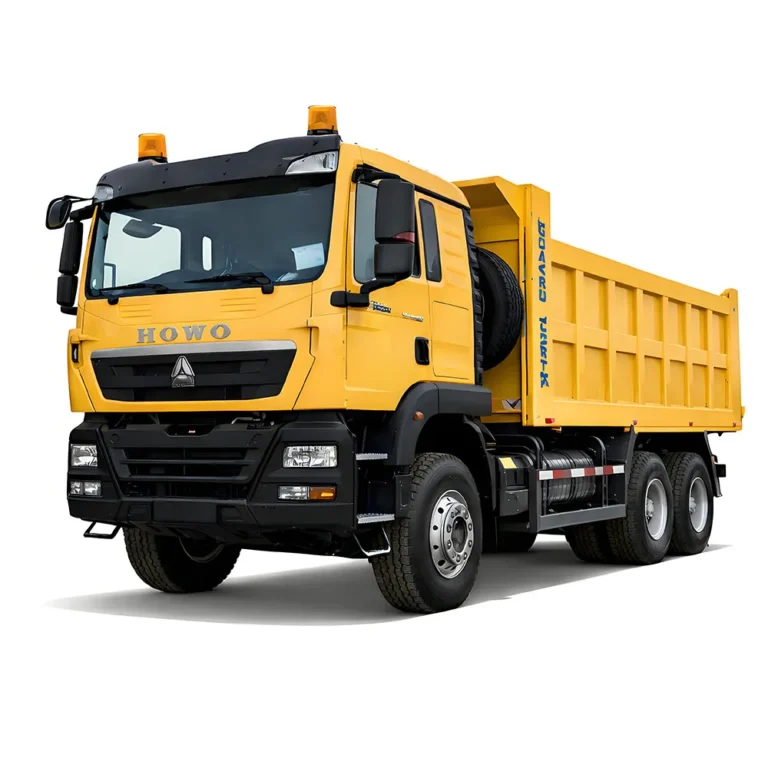
Contractors searching for new dump trucks for sale and used dump trucks for sale often begin by comparing purchase prices. However, the lower upfront cost of a used or refurbished unit only creates value when its condition, inspection process, and refurbishment scope are properly documented.
A professionally refurbished truck may offer a practical balance between acquisition cost and working capability. It can suit contractors expanding capacity, entering a new market, covering a fixed-duration project, or building a mixed fleet within a limited budget.
The risk is not purchasing a refurbished truck. The risk is treating every used dump truck for sale as though it has received the same level of mechanical inspection and restoration.
Before comparing a refurbished quotation with a new truck quotation, verify:
- Engine and transmission condition
- Chassis and frame condition
- Axle and suspension condition
- Brake and air systems
- Dump body structure
- Système de levage hydraulique
- Tire condition
- Système électrique
- Refurbishment work completed
- Road-test results
- Available vehicle documentation
If you are evaluating used dump trucks for sale in China, our used dump truck sourcing and inspection guide explains what to verify before treating a refurbished quotation as comparable to a new unit.
4. Emission Certification Has to Match Where the Truck Will Actually Work
Most heavy-duty construction vehicles are powered by diesel engines, but a diesel dump truck certified for one market’s emission standard is not automatically legal to import, register, or operate in another.
This is a common blind spot when buyers browse general used-equipment marketplaces. A listing may show a mechanically sound truck but provide limited information about whether its engine and emission documentation meet the destination country’s requirements.
Before ordering a diesel dump truck for sale, confirm:
- Engine model and identification
- Applicable emission standard
- Emission certificate availability
- Destination-country import requirements
- Local registration requirements
- Whether the truck will operate on public roads or only at a private site
- Whether any approved configuration changes are required
Confirm these requirements with the supplier and your customs or compliance representative before the truck ships. Resolving an emission mismatch after arrival can delay customs clearance, registration, and project deployment.
5. Quality Certification Tells You About the Process, Not the Individual Unit
ISO 9001 establishes requirements for how an organization manages and controls its quality processes. It does not certify the condition of an individual construction dump truck.
A truck supplier or manufacturer citing ISO 9001 should be able to provide relevant certificate information upon request. Contractors can use this as evidence that documented quality-management processes exist, but it should remain one part of a wider supplier assessment.
Individual vehicle quality still needs to be supported by the truck’s specifications, condition report, inspection documentation, photographs, videos, test results, and pre-shipment checks.
When comparing a truck manufacturer, a manufacturer-backed exporter, and an independent marketplace seller, ask how quality controls are applied to the specific vehicle being quoted—not only which certificates appear on the company profile.
6. Warranty Terms Should Specify What Happens After Delivery, Not Just What’s Covered
A warranty that lists covered components but does not explain how a claim will be handled after delivery provides limited protection to an overseas contractor.
Before you buy a dump truck, ask the supplier to clarify:
- Warranty duration
- Covered parts and systems
- Exclusions
- Claim submission process
- Evidence required for a claim
- Response time
- Responsibility for labor costs
- Replacement-parts shipping arrangements
- Availability of remote technical support
- Local or regional service options, where available
Sales, storage, maintenance, and spare-parts support vary by destination. A supplier should explain what is actually available in the country where the truck will work rather than relying on a general statement about global service.
For a fleet order, request consistent written warranty terms across all included units.
7. Spare-Parts Availability Affects Uptime More Than the Purchase Price
A construction project operating on a fixed schedule can lose more money from vehicle downtime than it saves through a lower purchase price.
Before contractors buy dump trucks, they should identify the parts most likely to be needed during the planned operating period. Ask which spare parts are included with the order, which can be added to the shipment, and which must be sourced separately after delivery.
A suitable spare-parts package may include selected filters, belts, seals, brake components, electrical components, hydraulic parts, and other maintenance items appropriate for the chosen truck model. The exact package should reflect the fleet size, expected working hours, local parts availability, and project duration.
Parts compatibility also matters. Standardizing engines, transmissions, axles, and other major components across a project fleet can simplify inventory and maintenance. This is one reason the lowest-priced combination of individual trucks may not produce the lowest fleet operating cost.
8. Lead Time Includes More Than Manufacturing
Order-to-delivery time includes more than vehicle production or refurbishment. Contractors should account for every stage between specification confirmation and job-site availability.
The complete lead time may include:
- Configuration confirmation
- Production or refurbishment
- Vehicle inspection
- Export documentation
- Inland transportation
- Port scheduling
- Roll-on/roll-off or containerized shipping
- Ocean transit
- Destination-port clearance
- Registration and local delivery
Each stage can add time independently.
A contractor planning around a fixed project start date needs the full estimated delivery schedule rather than only the manufacturing estimate. This is particularly important when sourcing multiple configurations or combining new dump trucks for sale with factory-refurbished units in one shipment.
Ask the supplier to separate estimated production, documentation, shipping, and clearance periods so the fleet deployment plan has realistic allowances.
9. Pricing Is a Function of Your Configuration, Not a Fixed List
Construction dump truck pricing is normally quotation-based because the final cost depends on more than the vehicle category.
Important pricing variables include:
- New, used, or refurbished condition
- Truck brand and model
- Engine and emission configuration
- 6×4 or 8×4 drive configuration
- Chassis and axle specification
- Target payload
- Dimensions de la benne
- Dump body material and reinforcement
- Système de levage hydraulique
- Tire specification
- Steering position
- Order quantity
- Spare-parts package
- Warranty coverage
- Destination country
- Shipping method
- Delivery port
Searches such as construction dump truck for sale, dumper truck for sale, or new dump truck for sale can help buyers identify available vehicle categories. However, a general listing price or “starting from” figure cannot represent the total cost of a truck configured for a specific project.
Finalize the main specification before requesting quotations. This produces more comparable offers and reduces the risk of receiving one quote for a basic road truck and another for a reinforced vehicle intended for quarry or construction work.
Contractors should also compare the total landed cost, including the truck price, optional equipment, spare parts, inland transport, export documentation, sea freight, insurance where applicable, customs charges, and local delivery.
10. Compare Sourcing Structure, Not Just the Listing
Browsing individual listings on a general used-equipment marketplace means comparing trucks from different sellers with potentially different inspection, documentation, refurbishment, warranty, and after-sales standards.
This approach can work when a contractor needs one vehicle to fill a temporary project gap and has the resources to inspect that individual unit independently.
Sourcing through a manufacturer-backed truck supplier provides a different structure. Vehicle configuration, inspection procedures, export documentation, warranty terms, spare-parts planning, and shipping coordination can be managed across the complete order. This becomes more important when contractors need several configurations or want consistent specifications across a project fleet.
Neither structure is automatically right for every buyer. The suitable choice depends on whether you are purchasing one truck, expanding an existing fleet, or sourcing a complete combination of new and refurbished construction vehicles.
Shandong All Life Cycle Automobile Sales Co., Ltd. supports overseas B2B buyers with new and factory-refurbished Sinotruk and Shacman dump trucks. Vehicle recommendations can be based on the application, material, road conditions, target payload, budget, project duration, destination country, and required delivery schedule.
FAQ
Should I prioritize a lower quote or a documented warranty when comparing suppliers?
A lower quote without clearly specified warranty and after-sales terms may not remain cheaper after unplanned downtime, replacement-parts shipping, or repairs are considered. Compare construction dump truck quotations with warranty coverage, inspection scope, parts support, and delivery terms included—not price alone.
Is a new truck always the safer choice for a project fleet?
Not automatically. A new truck may suit long-term projects, standardized fleets, and buyers seeking unused components and consistent specifications. A refurbished truck with documented inspection and refurbishment records can also be a sound option. The main risk is buying a used or refurbished truck without sufficient condition information.
How do I know if a truck’s emission certification will clear local registration requirements?
Confirm the engine model, emission standard, and supporting documentation with the supplier and your customs or registration representative before ordering. Requirements vary by destination country and should not be assumed from a general online listing.
Should contractors choose a 6×4 or an 8×4 construction dump truck?
Choose according to the material, payload target, axle-load regulations, road conditions, turning space, haul distance, and job-site access. A 6×4 often provides a practical balance of payload and maneuverability, while an 8×4 can distribute weight across more axles. The better configuration depends on the project and destination-market rules.
What information should I provide when requesting a construction dump truck quotation?
Provide the destination country, transported material, target payload or body volume, road conditions, haul distance, preferred configuration, emission requirement, steering position, new or refurbished preference, quantity, project schedule, delivery port, and spare-parts requirements.
If you are sourcing more than one configuration for a single project—such as 6×4 units for site-access roads and 8×4 units for main haul routes—our custom dump truck and mixed-fleet procurement guide explains how a mixed order changes specification, inspection, quotation, and shipping planning.
Send All Lifecycle your application, working conditions, target payload, destination country, required quantity, and budget range to receive a more suitable new, refurbished, or mixed-fleet construction dump truck recommendation.
Obtenir un devis
Nous vous répondrons dans les 24 heures. En cas d'urgence, veuillez ajouter WhatsApp/WeChat : +86 17686600717. Ou appelez directement le +86 17686600717.
*Nous respectons votre confidentialité et toutes les informations sont protégées.
Nous n'utiliserons vos informations que pour répondre à votre demande et n'enverrons jamais de messages électroniques ou promotionnels non sollicités.