











What Is a Dump Truck? Types and Configurations Explained
Autor: Alllifecycle
Publish Time: 2026-08-07
A dump truck is a truck fitted with an open, hydraulically operated box body that tilts to discharge loose material — sand, gravel, ore, demolition debris — without manual unloading. The term covers a wide range of chassis types, from two-axle municipal trucks to six-axle mining haulers, and the differences between them determine which jobs a given truck can actually do.
Rigid or Articulated: The First Fork in Dump Truck Design
Every dump truck sits in one of two structural families, and the split matters more than any paint job or badge.
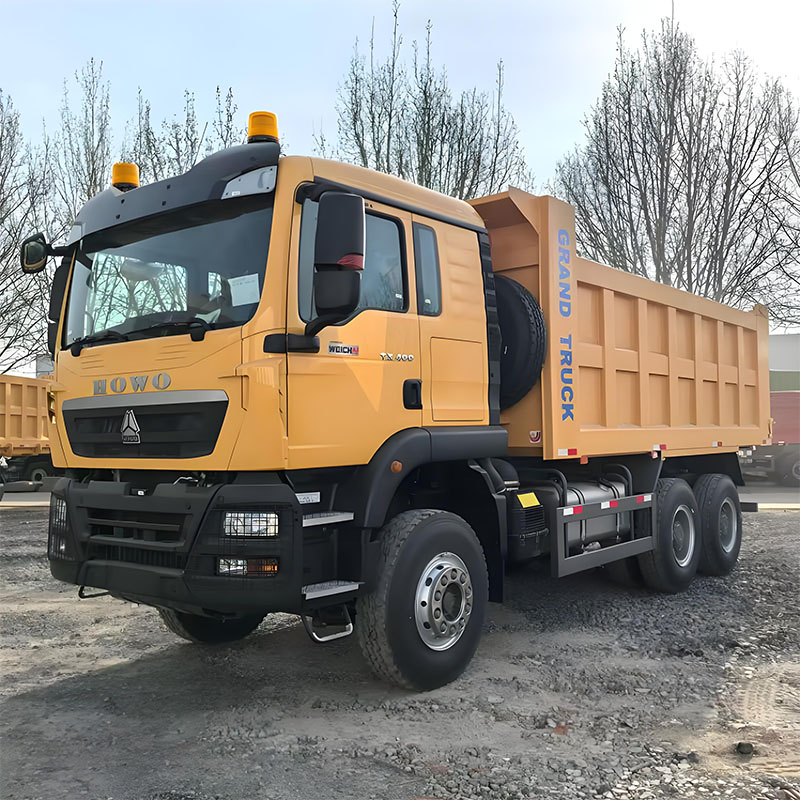
A rigid dump truck has a single, unbroken frame from cab to tailgate, steered the same way as an ordinary highway truck — through the front wheels only. This keeps the vehicle simple to maintain and lets it run at normal road speeds, which is why rigid trucks dominate on paved haul roads, municipal contracts, and general construction sites.
An articulated dump truck (ADT) is built in two sections — a tractor unit and a separate dump body — joined by a pivoting hitch. Steering happens at that joint, so the truck can bend in the middle rather than relying on front-wheel angle alone. That single design choice changes what the truck is good at: articulated units keep traction across all wheels on soft or uneven ground, which is why they show up on mine sites, wet clay, and off-road earthworks where a rigid truck would bog down.
The trade-off most buyers underestimate: articulated trucks carry more hydraulic and pivot-joint hardware, which means more service points and a narrower base of technicians who know the linkage well. A fleet that runs mostly on compacted, paved routes often gets no practical benefit from an ADT and simply inherits that extra maintenance surface for nothing.
Axle Configuration and What It Actually Sets
Axle count is not a cosmetic spec — it is the single number that determines legal payload class and where a truck is allowed to run loaded.
| Configuration | Typical Axle Count | Common Role |
| Light/medium dump truck | 2 axles (4×2) | Municipal work, landscaping, short local hauls |
| Standard heavy dump truck | 3 axles (6×4) | General construction, quarry-to-site hauling |
| Caminhão basculante de alta capacidade | 4 axles (8×4) | Higher-payload construction and mining feeder routes |
| Multi-axle / tandem trailer combination | 5+ axles | Long-haul bulk transport, cross-border freight |
More axles spread gross weight across more contact points, which is what allows a heavier gross vehicle weight under most road-weight regulations — but it also adds tires, brake circuits, and axle maintenance intervals to track. A buyer sourcing for a single fixed route (say, a quarry-to-plant loop under 20 km) rarely needs to go past a 6×4 configuration; the extra axle only pays for itself once route weight limits or terrain start working against a 3-axle truck.
Body Styles: Where a Common Mix-Up Happens
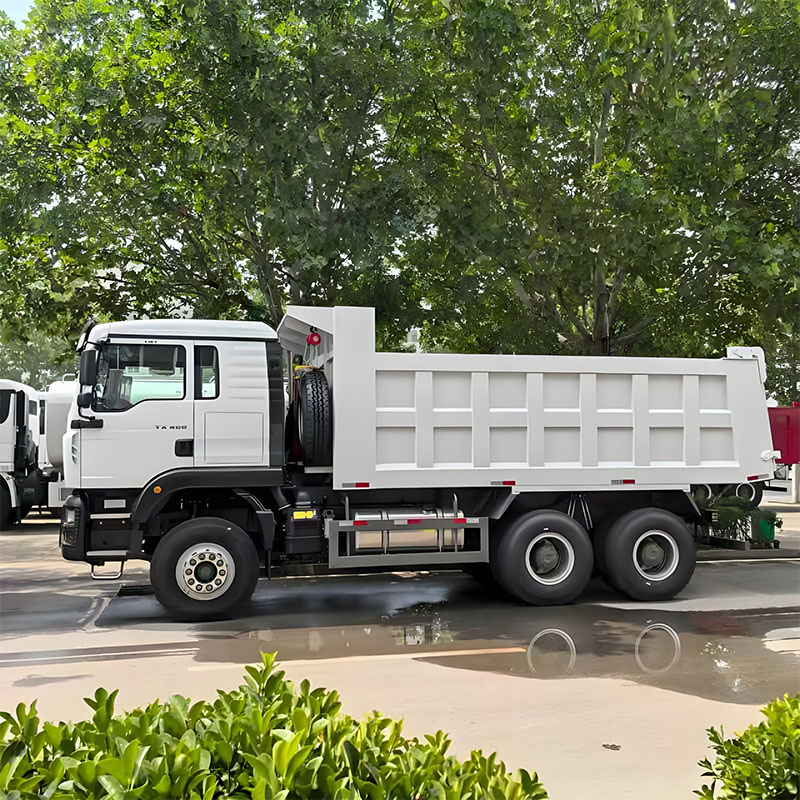
Most buying confusion around dump trucks isn’t about axles — it’s about mistaking a dump truck for a dump trailer. A dump truck integrates the tilting body directly onto its own powered chassis; a dump trailer is a separate, unpowered box towed behind a tractor unit. They’re often listed under the same search terms, but a dump trailer requires a separate tractor to move at all, while a dump truck is a complete, self-contained working unit.
Within dump trucks themselves, body style is the second variable:
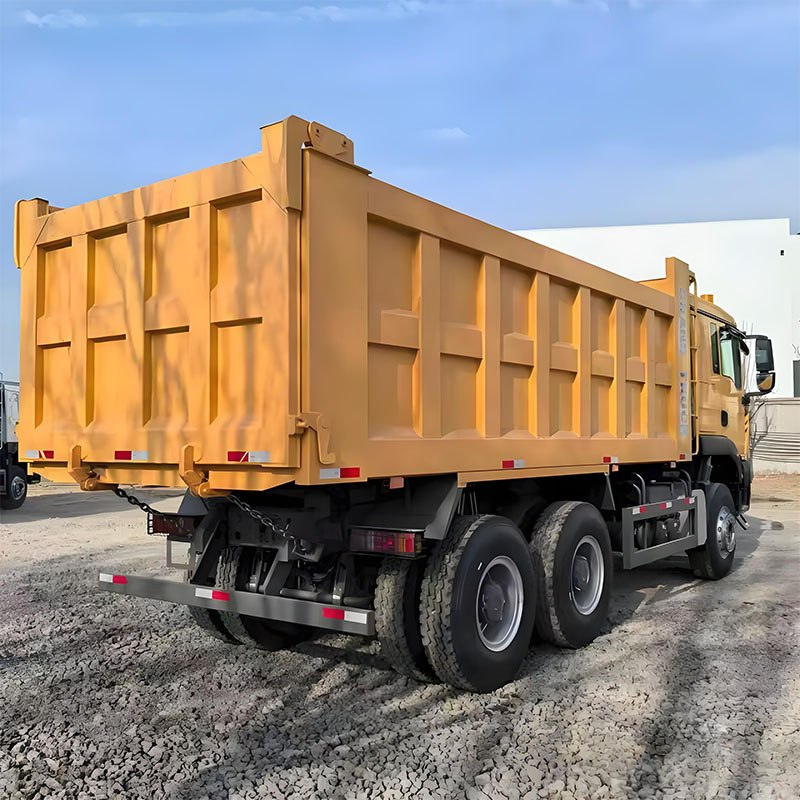
- Standard rear-dump body — tilts backward, releases the load from the tailgate end. The most common configuration for construction and quarry work.
- Full-ejector body — uses a moving front panel to push material out the back rather than tilting the whole box. This keeps the truck’s center of gravity lower during unloading, which matters on uneven or sloped ground where a tilted rear-dump body raises rollover risk.
- Side-dump body — tilts to one side, useful where a truck needs to unload along a narrow strip (road-building, pipeline trenching) without maneuvering for a rear approach.
Manufacturing Standards Behind the Vehicles You’re Sourcing
Chassis quality is not something a buyer can verify by looking at a listing photo, which is why traceable manufacturing history matters more than marketing copy.
ALL LIFECYCLE’s parent manufacturing operation traces back to a 2006 cooperation with Sinotruk Group, and the current annual special-vehicle modification capacity runs above 12,000 vehicles across five major product series and more than 100 models — figures that come from the manufacturer’s own public disclosures rather than third-party estimates.
On the certification side, quality-system claims are only meaningful when tied to a recognized standard rather than a vague “certified” label. The manufacturing operation states it holds ISO 9001:2008 quality management system certification — a standard maintained by the International Organization for Standardization that sets requirements for an organizational quality management system. Buyers evaluating any supplier’s ISO claim should ask for the certificate number and current validity date rather than accepting a logo on a webpage — a certification tied to a 2008 edition, in particular, is worth confirming against the supplier’s current scope before treating it as a live selling point.
Compared with generic broker listings that resell whatever inventory happens to be on hand, a manufacturer-backed supplier can usually trace a given chassis back to its own production line and modification records — a distinction worth confirming with any exporter before ordering, since not every seller using “factory-direct” language actually controls manufacturing.
Weighing the Trade-Offs
No single configuration is “the best” dump truck — each one solves a narrower problem than the marketing around it suggests.
What rigid trucks get right: lower purchase and service cost, simpler driver training, and full compatibility with normal highway speed limits. Where they fall short: traction on loose or wet ground, where a rigid chassis can lose drive on all but the front-loaded axle.
What articulated trucks get right: consistent traction across uneven or soft terrain that would strand a rigid truck. Where they fall short: higher unit cost, a narrower repair network for the pivot-and-hydraulic assembly, and no real speed advantage on paved roads.
Price for any of the above depends on condition (new, used, or refurbished), engine and emission configuration, axle count, body type, and destination shipping terms — there is no single number that applies across configurations, so a specific quote requires specifying the exact spec and destination port.
FAQ
Q: Can a dump truck be converted from rigid to articulated, or vice versa?
A: No. The steering geometry and frame are structurally different from the ground up; conversion isn’t a retrofit option, only a full chassis replacement.
Q: Does a higher axle count always mean higher payload?
A: Not automatically — payload also depends on suspension rating, tire load index, and the destination country’s road-weight limits, so axle count sets the ceiling but doesn’t guarantee it’s usable on every route.
Q: Is a full-ejector body worth the added cost over a standard rear-dump body?
A: Only if the operating terrain includes slopes or uneven ground where a tilting rear body raises rollover risk; on flat, compacted sites the standard rear-dump body does the same job for less.
Next question worth asking before ordering: which of these configurations actually clears your destination country’s axle-weight and emissions rules — that’s a port-specific check, not a design one, and it’s covered in the sourcing walkthrough linked below.
Solicitar um Orçamento
Nós responderemos dentro de 24 horas. Se for um caso urgente, por favor adicione WhatsApp/WeChat: +86 17686600717. Ou ligue diretamente para +86 17686600717.
*Respeitamos sua confidencialidade e todas as informações estão protegidas.
Usaremos suas informações apenas para responder à sua consulta e nunca enviaremos e-mails não solicitados ou mensagens promocionais.