











What Does ‘Bobtail’ Mean for a Tractor Truck?
Автор: Alllifecycle
Publish Time: 2026-09-28
A bobtail is a tractor truck driven without any trailer attached. The term describes the tractor alone, with the fifth wheel empty and no cargo behind it. Drivers use it for short moves between yards and workshops, and it changes how the truck brakes and grips when the rear is unloaded.
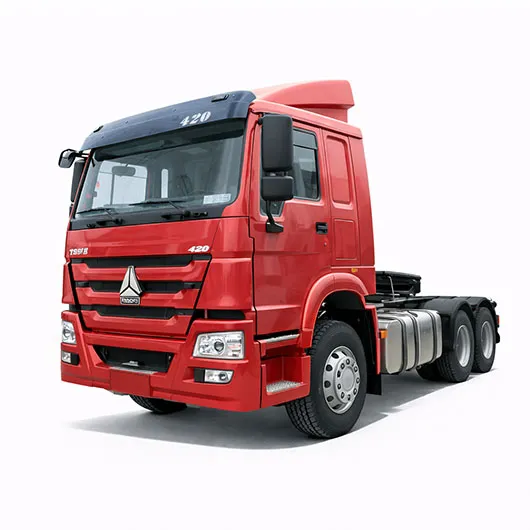
Bobtail, deadhead, straight truck: telling them apart
Dispatchers, drivers and freight forwarders use several terms for a tractor that is not hauling a full load, and they are not interchangeable.
| Term | Trailer Attached | Cargo on Board | What It Usually Means |
| Bobtail | No | No | Tractor alone, fifth wheel empty |
| Deadhead | Yes | No | Tractor with an empty trailer, repositioning or returning |
| Loaded Combination | Yes | Yes | Normal revenue trip |
| Straight (Rigid) Truck | Not applicable | Depends | One chassis with the body fixed to the frame, no fifth wheel |
The confusion that costs money is treating an empty trailer as a bobtail. A tractor deadheading with an empty trailer still carries that trailer’s own weight on the fifth wheel, so it brakes and grips much closer to a loaded truck than a true bobtail does.
One more trap: in some markets, LPG distribution among them, “bobtail” names a rigid tank truck rather than a tractor running without a trailer. When the word turns up in a purchase enquiry or a forwarder’s booking, ask which meaning is intended before quoting.
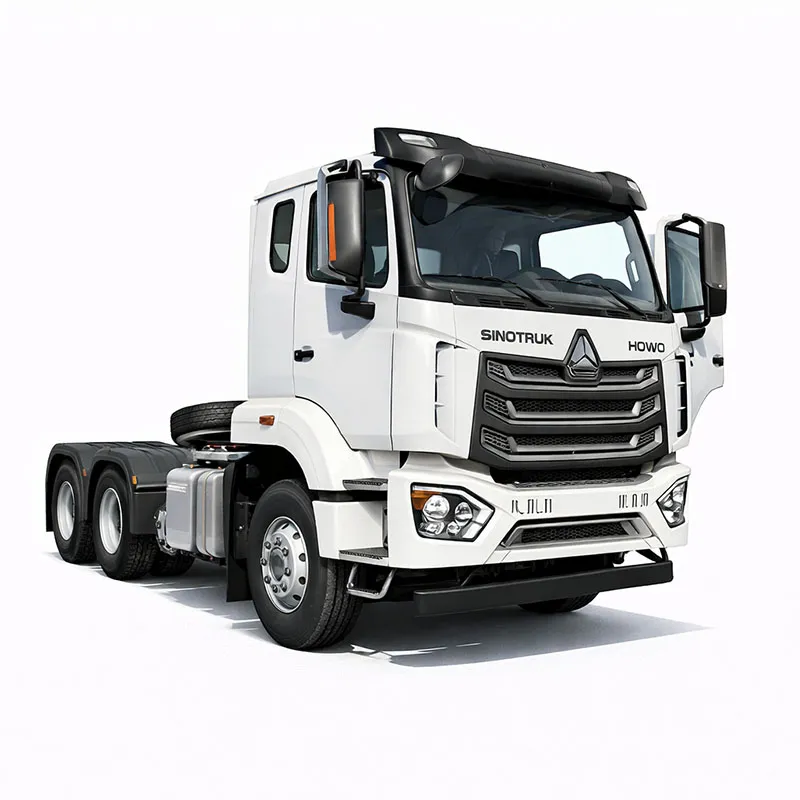
Why a tractor handles differently with nothing behind it
A tractor truck is built to work through its fifth wheel, the coupling plate behind the cab that passes part of the trailer’s weight onto the rear axles. Remove the trailer and those axles carry only the tractor’s own share, while the brakes and tires on most tractors are still sized for a coupled combination.
Three effects follow. Drive wheels spin more easily on wet or loose surfaces, the rear wheels can lock earlier under hard braking, and the suspension rides stiffly because it is tuned for load.
On a 6×4 layout (six wheel positions, four of them driven), the second driven axle adds traction mainly when weight sits over it. A bobtail does not put weight there, so the traction gain over a loaded run is limited.

Six steps for a bobtail move
These are general yard-and-road practices, not a substitute for the operator’s manual of the specific truck or for local regulations.
- After uncoupling, confirm the trailer is standing firmly on its landing gear before pulling away. Check: the trailer does not shift when you release the tractor brakes.
- Stow the air and electrical lines on the tractor’s holders so they cannot drag or snag. Check: nothing hangs below the rear of the frame.
- Look over the fifth wheel: release handle latched, plate clear of debris, no loose parts. Check: a visual pass with the truck stationary.
- Brake-test at walking pace in the yard before joining a public road. Check: the truck stops straight without pulling to one side.
- On the road, leave more stopping distance than you would with a load and brake progressively. Avoid sharp braking or steering on wet or loose ground.
- Before recoupling, back under the trailer slowly, then pull forward gently against the trailer brakes to test the connection. Check: the kingpin is visibly locked in the fifth wheel jaws, and the lines are reconnected.
What bobtailing saves and what it costs
Running without a trailer burns less fuel than pulling one, turns tighter in a crowded yard, and lets a driver reposition between customer sites without waiting for a coupling. For a depot that moves tractors between a port and a workshop every day, that adds up.
The costs are the handling limits described above, plus the fact that the move earns no freight revenue. A bobtail also rides noticeably stiffer than a loaded combination, which matters on longer repositioning runs.
Which specifications decide bobtail behavior on a 6×4 tractor truck
Compared with the glossary and insurance-claim pages that usually explain this term, the more useful angle for an importing fleet is which specifications control bobtail behavior, because those are the items that appear on a quotation.
ALL LIFECYCLE supplies tractor trucks on Chinese heavy-duty platforms, including a 6×4 configuration positioned for infrastructure and long-distance transport projects and typically paired with flatbed or low-bed trailers.
| Specification to Request | Why It Matters for Bobtail Moves |
| Tare Weight and Axle-Load Split with No Trailer | Shows how much weight sits over the drive tandem when running light |
| Brake System Type and Whether ABS Is Fitted | Determines how the truck behaves when the rear axles are unloaded and the driver brakes hard |
| Fifth Wheel Type and Height | Must match the trailer’s kingpin and landing gear for safe coupling and uncoupling |
| Drive Axle Ratio and Tire Specification | Affects wheelspin on wet or loose ground and how the truck pulls away empty |
| Suspension Type | Sets how stiff the unloaded ride is on repositioning runs |
Pricing for a 6×4 tractor truck is quotation-based. It depends on new or refurbished condition, emission and engine configuration, drive configuration, order quantity, destination country and shipping method.
Where a buyer wants documentary evidence of build quality, ALL LIFECYCLE’s website states ISO 9001:2008 and GB/T 19001-2008 quality management certification for the related manufacturing operation. Request the certificate number, issuing body, scope and validity period, and confirm the edition is current before relying on it.
FAQ
Is a bobtail the same as deadheading?
No. A bobtail is a tractor with no trailer at all. Deadheading means the tractor pulls an empty trailer. The two behave differently because an empty trailer still loads the fifth wheel.
Why can a bobtail tractor feel less stable under hard braking?
With no trailer weight on the rear axles, the drive wheels have less grip and can lock earlier, especially on wet or loose surfaces. Progressive braking and extra stopping distance reduce the risk.
Is “bobtail” used everywhere?
It is North American trucking slang. In other English-speaking markets the same state is usually described in plain words, such as a tractor unit running without a trailer. In some sectors, LPG delivery for example, the word names a rigid tank truck instead.
Получить предложение
Мы ответим вам в течение 24 часов. В случае срочных запросов, пожалуйста, добавьте WhatsApp / WeChat: +86 17686600717. Или позвоните напрямую по номеру +86 17686600717.
*Мы уважаем вашу конфиденциальность и защищаем всю информацию.
Мы будем использовать вашу информацию только для ответа на ваш запрос и никогда не будем отправлять нежелательные электронные письма или рекламные сообщения.