











What Is a Dump Truck? Types and Configurations Explained
Autore: Alllifecycle
Publish Time: 2026-07-30
Tom | Corporate Editorial Team | Published: July 20, 2026
A dump truck is a vehicle built to haul loose bulk material and unload it by tilting the body so gravity does the work. Beyond that single idea, the category splits into rigid-frame and articulated designs, several axle layouts, and a handful of body styles suited to different job sites.
The Core Mechanism: What Actually Makes a Truck a “Dumper”
Strip away the branding and every dump truck shares three parts: a chassis, a load-bearing body (also called a bed or box), and a hydraulic hoist that lifts the body’s front edge so material slides out the rear. The hoist is usually a telescopic or scissor-type ram running on the truck’s own hydraulic pump, powered off the engine’s power take-off.
What varies is everything around that mechanism — how the chassis is built, how many axles carry the load, and what shape the body takes for a given material. Those variations are what actually determine which truck fits a job.
Rigid vs. Articulated: The First Fork in the Road
This is the split most buyers hit first, and it’s a chassis question before it’s anything else.
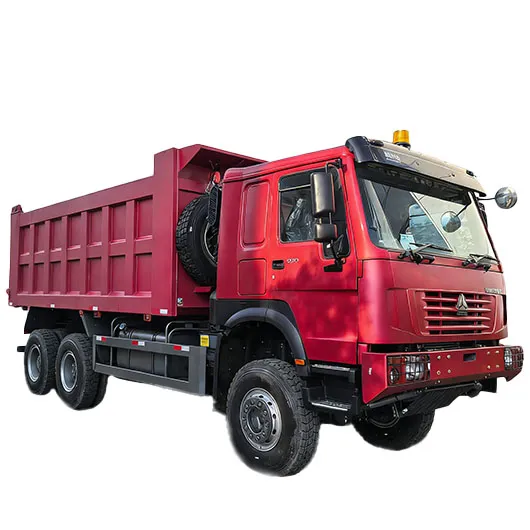
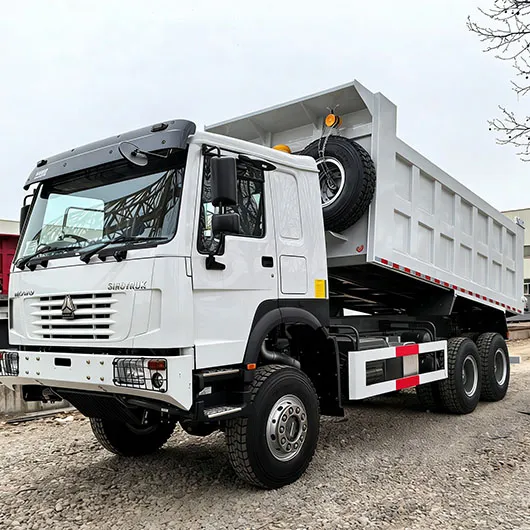
A rigid dump truck has a one-piece frame, like a conventional truck. Steering happens at the front wheels only. These trucks handle well on paved or semi-improved roads, carry high payloads relative to their size, and are the more common choice for highway-adjacent construction, quarry haul roads with decent surfaces, and municipal work.
An articulated dump truck has a hinge point between the cab and the dump body, with a hydraulic steering ram that pivots the two halves independently. That hinge is the whole point: on soft, uneven, or steeply graded ground, an articulated truck can follow terrain that would twist a rigid frame or bog it down. This is why articulated trucks dominate off-road mining and earthmoving sites where there’s no real road at all.
The trade-off is speed and stability. Articulated trucks generally run slower on paved surfaces and have a narrower stable-operating envelope than a rigid truck of comparable capacity, since the pivot point changes how the load’s center of gravity behaves in turns.
| Factor | Rigid Dump Truck | Articulated Dump Truck |
| Telaio | One-piece | Hinged, two-section |
| Sterzo | Front wheels | Pivot joint + front wheels |
| Best surface | Paved / semi-improved | Soft, uneven, off-road |
| Typical use | Highway construction, quarries, municipal haul | Mining, large-scale earthmoving |
| Road speed | Higher | Lower |
| Turning behavior | Predictable, standard | Wider swing radius, softer traction control on grade |
Axle Configurations and What They Change for Payload
Axle count and arrangement determine legal payload and how weight distributes across the frame, not just how many wheels touch the ground.
- 6×4 (tandem rear axle, two of them driven). The most common configuration for standard construction dump trucks — one steer axle, two drive axles at the rear. Balances payload capacity with maneuverability.
- 8×4 (tri-axle, two rear axles plus an additional axle). Adds a third rear axle to spread weight over a longer wheelbase, which raises the legal gross vehicle weight in most jurisdictions without needing a second trailer.
- 10-wheeler and higher configurations. Used for the largest rigid dump bodies, typically paired with heavier-duty suspension and frame rating to match the added axle load.
A common misconception: more axles do not automatically mean more usable payload on every route. Bridge weight limits, axle spacing rules, and per-axle load caps vary by country and by road class, so a truck rated for a high gross weight on one axle spread can still be restricted on a specific route. Buyers sourcing trucks for export should confirm the destination country’s axle-load regulations before finalizing a configuration — not just the truck’s rated capacity on paper.
Common Body Styles and What Each One Is Built For
The body — the box or bed that holds the load — is usually matched to the material, not the chassis:
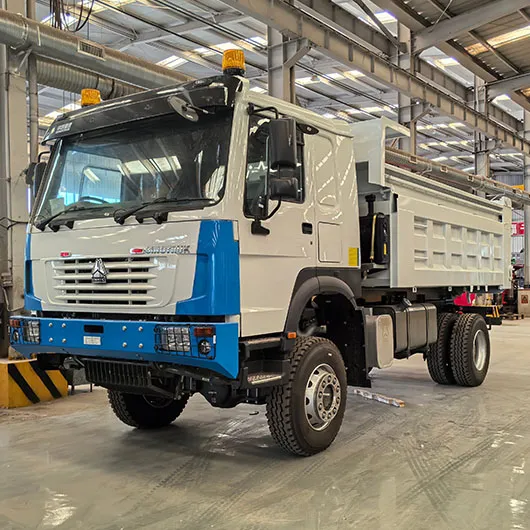
- Standard/straight dump body. A simple rectangular box, hinged at the rear, for general aggregate, soil, and construction debris.
- U-shaped (contoured) body. Rounded interior corners that reduce material sticking, common for wet or sticky loads like clay.
- Coal/ore body (higher sides, reinforced floor). Built with thicker steel and a deeper profile for dense, abrasive material.
- Semi-elliptical or rounded body. Common on articulated trucks, shaped to shed material cleanly even on a steep dump angle.
Body wall thickness and floor reinforcement matter more for service life than most buyers expect. A body rated for soil will wear through faster than expected if it’s routinely loaded with crushed rock or ore, since abrasive material grinds against the steel with every load cycle — this is a spec question worth raising with a supplier before purchase, not after the first year of service.
Where Manufacturing Standards Fit In
camion ribaltabile bodies and chassis are typically produced under a documented quality management system rather than built ad hoc. As a reference point, ISO 9001, maintained by the International Organization for Standardization, sets the general requirements an organization’s quality management process is expected to meet — it’s a system-level standard, not a guarantee about any single vehicle’s spec sheet, so it’s worth asking a supplier for the certificate’s scope and current validity rather than assuming it covers every product line.
Pros and Cons: Choosing Between the Two Main Types
Rigid dump trucks are simpler to maintain, faster on improved roads, and generally cheaper to operate per mile on paved routes. The downside is limited off-road capability — steep grades or loose, uneven ground reduce traction and control quickly.
Articulated dump trucks hold traction and stability on rough or soft terrain that would stall a rigid truck, and they handle steeper grades more predictably. The downside is a higher upfront cost for comparable payload and generally lower top speed, which matters if a project involves long hauls on decent roads rather than short off-road cycles.
Neither type is a universal answer. A quarry with paved haul roads and a mine site with no roads at all are different problems, and the truck that wins one loses the other.
Pricing: What Actually Determines the Number
Dump truck pricing is quotation-based rather than fixed, since it depends on chassis condition (new, used, or refurbished), axle configuration, body material and thickness, engine and emission tier, destination-country certification requirements, and shipping method. Buyers sourcing for export should expect to provide a target country and rough spec before getting a workable quote, rather than a single list price.
FAQ
Q: What’s the main difference between a dump truck and a tipper truck?
A: In most English-speaking markets these terms describe the same vehicle type — a truck with a hydraulically tilting body. Regional naming varies more than the mechanism does.
Q: Can a rigid dump truck work off-road?
A: To a point. Rigid trucks handle graded, compacted off-road surfaces reasonably well, but they lose traction and stability faster than articulated trucks on loose or steep terrain.
Q: How many axles does a standard construction dump truck have?
A: Most fall into the 6×4 tandem-axle category, though 8×4 tri-axle configurations are common where higher gross weight is needed on the same route.
Q: Does a bigger dump body always mean more payload?
A: No. Payload is capped by chassis rating, axle configuration, and route weight limits — a larger body without a matching chassis and axle spec just means it can’t be loaded to its visual capacity.
Richiedi un preventivo
Ti risponderemo entro 24 ore. In caso di emergenza, aggiungi WhatsApp/WeChat: +86 17686600717. Oppure chiama direttamente +86 17686600717.
*Rispettiamo la tua riservatezza e tutte le informazioni sono protette.
Utilizzeremo solo le tue informazioni per rispondere alla tua richiesta e non invieremo mai email indesiderate o messaggi promozionali.