











SHACMAN Automobile 20m³ Tanklastwagen: Ein praktischer Leitfaden für den Tanktransport von Schüttgut
Choosing the wrong tank truck can lead to leaks, unstable handling, slow unloading, and wasted money. That problem grows fast when routes are long and delivery schedules are tight. The better solution is a purpose-built fuel tanker truck with the right tank system, chassis, and export support.
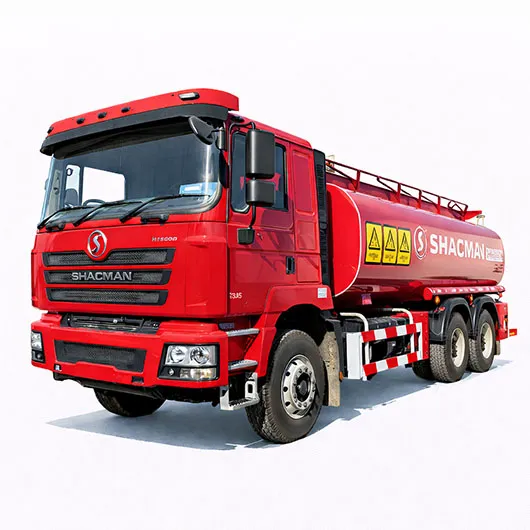
A SHACMAN Automobile 20m³ Fuel Tanker Truck is a heavy-duty tanker built for safe, efficient fuel distribution. On All Lifecycle’s product page, it is positioned for long-distance fuel logistics, with optional Weichai or Cummins power, a 20 m³ tank, optional compartment design, aluminum alloy fittings, and an integrated dispensing system for stable fuel transfer.
If you buy trucks for projects, depots, distributors, or fleet operations, you already know this: the truck itself is only half the decision. The other half is matching the configuration to your routes, fuel type, regulations, and service plan. That is where All Lifecycle tries to stand out. The company presents itself as a China-based export-oriented truck supplier working with brands such as Shacman and Sinotruk, while also offering new and high-quality used trucks, customization, export handling, and after-sales support for overseas B2B buyers.
Why is the SHACMAN 20m³ fuel tanker truck attractive to overseas buyers?
The biggest reason is fit. A good fuel tank truck must carry liquid cargo safely, stay balanced on real roads, and support efficient unloading at the destination. The product page describes this model as a purpose-built fuel transportation solution for safe, efficient, and precise delivery of petroleum products, especially in long-distance distribution and bulk fuel logistics.
I also think buyers like clear, practical configurations. This shacman model is not presented as a flashy concept. It is shown as a working automobile for real fleet tasks: stable handling, accurate dispensing, and corrosion-resistant tank components. That is exactly what importers and project buyers usually care about most.
For B2B customers, flexibility matters too. All Lifecycle states that it supplies both new trucks and high-quality used trucks for global markets, which helps buyers combine budget control with fleet planning. For a distributor or contractor, that can mean pairing one new tanker with one used sinotruk howo support truck or adding a refurbished dump truck to the same order.
What makes a 20m³ tanker different from smaller tanker trucks?
Capacity changes the business case. A 20m³ tanker gives buyers a stronger balance between payload and route efficiency than many smaller tanker trucks. On the product page, the tank capacity is clearly stated as 20 m³, which equals about 20cbm or 20 cubic meters, and that directly supports higher-volume fuel distribution work.
In practical terms, more capacity can reduce trip frequency. That matters for fleet operators serving depots, fuel stations, industrial customers, or project sites. A bigger tank truck can move more diesel or other refined products per trip, which can lower labor cost and improve route economics when the roads and regulations allow it. This is especially useful in medium- and long-distance fuel delivery scenarios, which the page specifically highlights.
Of course, bigger is not always better. The right size depends on road width, turning limits, daily delivery pattern, and unloading conditions. But for many professional buyers, a shacman 20m³ model hits the sweet spot between capacity and workable mobility.
Why does the 6×4 SHACMAN truck layout matter for fuel transport?
The product page lists drive type as “as configured,” but the market commonly pairs this kind of model with a 6×4 heavy chassis, and your keyword direction clearly reflects that buying logic. For fuel hauling, a 6×4 layout is widely valued because it gives good balance between load support, stability, and route practicality. Combined with 10 wheels, it usually suits serious road transport without the complexity of the largest configurations.
A liquid load behaves differently from dry cargo. Fuel moves inside the tank under braking, turning, and uneven surfaces. That is why the truck’s axle logic, suspension behavior, and mounting design matter so much. All Lifecycle’s page specifically says the truck has a well-balanced chassis and tanker layout, plus an optimized tanker structure and mounting design to improve stability and safety when carrying liquid fuel.
For many buyers, that makes a shacman truck like this more practical than forcing a smaller 4×2 into work it was not built for. A 4×2 might suit lighter regional service, but a serious fuel tanker truck for bulk delivery often needs stronger support. At the same time, some fleets may later scale into 8×4 or semi trailer tanker systems when route density and volume grow.
What tank structure and fuel system details should buyers check first?
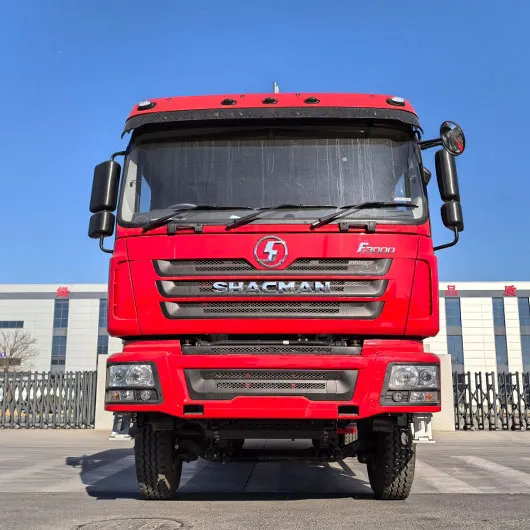
This is where a professional tanker proves its value. All Lifecycle highlights several key system details: optional compartmentalized tank design, 20-inch aluminum alloy manhole covers, aluminum alloy subsea valves, fuel nozzles, flow meters, and a copper gear oil pump. Those are not decorative specs. They directly shape sealing reliability, corrosion resistance, dispensing accuracy, and long-term service performance.
The optional compartment design is especially useful. It lets operators transport multiple fuel types at once. For example, one buyer may need diesel in one section and another refined product in another. That improves route flexibility and helps the same tank truck serve mixed delivery needs.
I always tell buyers to study what happens inside the tank, not just outside it. Tank segmentation, sealing design, manhole access, and valve quality all affect safety and operating efficiency. If you move oil fuel, gasoline, or other petroleum products daily, those details are where maintenance cost and delivery accuracy are won or lost.
Key tank and fuel system items
- Optional compartmentalized tank structure
- 20-Zoll Aluminiumlegierung Manhole-Abdeckungen
- Aluminum alloy subsea valve design
- Integrated nozzle and flow meter
- Copper gear oil pump
- Multi-point sealing for leakage prevention
Is the SHACMAN 20m³ fuel tanker truck only for diesel and gasoline delivery?
No. The page frames it around petroleum products, bulk energy delivery, and refined oils. It specifically mentions gasoline, diesel, and other refined oils in its application section, which shows that the truck is aimed at broader fuel transport, not one narrow liquid only.
That means the truck can fit several roles. It can work as an oil tanker truck for depot-to-station supply. It can act as a refueling truck for equipment fleets. It can support industrial sites that need controlled fuel transfer. In some operations, it may even function almost like a compact fuel truck alternative to larger tanker trucks or trailer systems.
I would not market it as a water truck or any unrelated service body, because this page is clearly written for fuel logistics. But I would absolutely highlight that one properly configured fuel tank truck can help operators refuel stations, machinery, project vehicles, and regional supply points more efficiently.
How does this SHACMAN tanker compare with other heavy truck categories?
This question matters because B2B buyers rarely buy one truck type in isolation. A distributor handling tanker trucks may also stock a cargo truck, dump truck, or crane truck. A contractor may need one fuel tank truck, one mixer truck, and one support tipper in the same quarter. All Lifecycle’s wider site structure reflects exactly that multi-category buying logic.
Compared with a cargo vehicle, this model is purpose-built for liquid handling. Compared with a dump truck, it focuses on sealed transport and precise discharge, not tipping. Compared with a shacman f3000 or sinotruk howo tractor-style haulage setup, it is a self-contained liquid logistics tool rather than a trailer puller.
That broader context actually helps sell the tanker. Buyers like seeing that the same exporter can also support Sinotruk, Shacman, and mixed-fleet sourcing. If one supplier can help with an oil tank truck, a howo 6×4 dump unit, and later a bulk-haul or municipal truck, the relationship becomes more valuable over time.
What customization options matter most for overseas buyers?
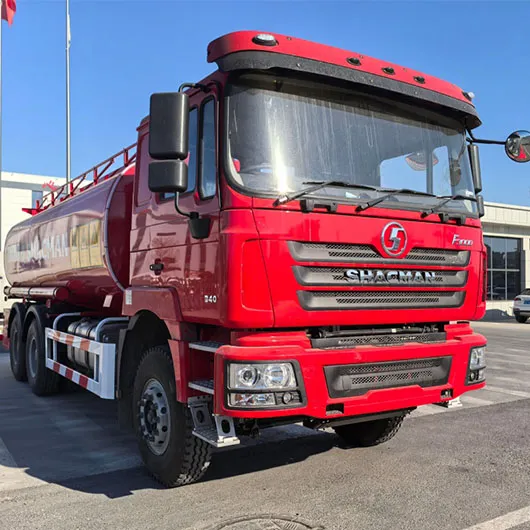
This product page gives one of the clearest answers: engine selection, tank structure, fuel system configuration, material and component selection, and application-oriented setup. In simple terms, the customization options are built around the job, not just cosmetics.
For example, a buyer may want a multi-compartment body, specific emission rules for the destination market, a certain dispensing arrangement, or a different drive type. All Lifecycle explicitly says specifications can be customized according to application, destination regulations, and customer requirements, including drive type, engine power, emission standard, and body configuration.
That is exactly what overseas B2B customers usually ask for. They want the truck to fit local work and local compliance. In my view, that is far more important than generic “best price” language. A tanker truck is engineered to solve a real transport problem, and the right customization is what turns a decent truck into a reliable fuel-delivery asset.
Common buyer requests
- Engine brand and output
- Tank compartment count
- Durchflussmesser und Kraftstoffspender-Einrichtung
- Anordnung des Antriebs und Marktkonformität
- Materialauswahl für Korrosionsbeständigkeit
- Markenbildung und Unterstützung bei Exportdokumenten
Was sollten Käufer fragen, bevor sie ein Angebot anfordern?
Beginnen Sie mit der Route und dem Produkt. Teilen Sie dem Exporteur mit, was Sie transportieren werden, wie lange Sie fahren werden und welche Straßenbedingungen der Lkw vorfinden wird. Der Bestellleitfaden auf der Seite fordert die Käufer spezifisch auf, Transportaufgaben, durchschnittliche Nutzlast, Straßenbedingungen, Routenlänge und lokale Vorschriften vor der Angebotserstellung zu teilen.
Fragen Sie dann nach dem Versand, der Inspektion und dem Support. All Lifecycle sagt, dass es die Lkw vorbereitet, die Vorabinspektion durchführt und Fotos vom Laden, Versandzeitpläne und Exportdokumente bereitstellt. Die FAQ besagen auch, dass Fotos und Videos über den Zustand von Shacman-Lkw vor dem Versand bereitgestellt werden und dass langfristige technische Unterstützung sowie Ersatzteilhilfe verfügbar sind.
Hier ist die Rolle des Exporteurs genauso wichtig wie der Lkw selbst. Ein ernsthafter Käufer sucht nicht nur nach einem zu verkaufenden Lkw. Er sucht einen Partner, der die Konfiguration, den Exportzeitplan, die Zollpapiere und die nach der Ankunft erforderliche Fahrzeugbetriebsfähigkeit versteht.
Angebotscheckliste
- Zu transportierendes Produkt: Diesel, Benzin, raffiniertes Öl oder sogar einige Diskussionen über den Transfer von Rohöl, wo es gesetzlich angemessen ist
- Tankgröße und Bedarf an Abteilungen
- Benötigter Leistungsbereich: 340 PS, 380 PS oder andere
- Regeln für den Zielmarkt
- Versandbudget und bevorzugte Methode
- Bedarf an Ersatzteilen und Fernsupport
Warum spricht das Geschäftsmodell von All Lifecycle Importeure und Projektkäufer an?
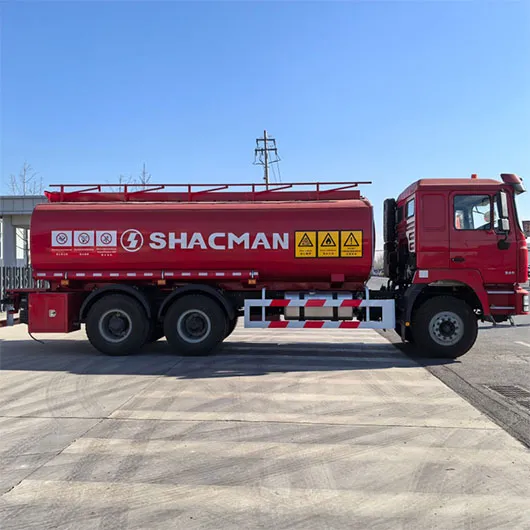
Weil es die Beschaffungsfriktion reduziert. Die FAQ besagen, dass das Unternehmen ein professioneller exportorientierter Lkw-Lieferant in China ist, der eng mit führenden Herstellern wie Sinotruk und Shacman zusammenarbeitet und auch eigene Lkw-Vorbereitungseinrichtungen betreibt. Es liefert sowohl neue als auch hochwertige gebrauchte Lkw und exportiert hauptsächlich nach Afrika, dem Nahen Osten, Südostasien, Zentralasien und Südamerika.
Für einen Importeur bedeutet das, dass eine Quelle mehrere Lkw-Kategorien abdecken kann. Für einen Projektkäufer bedeutet es mehr Flexibilität, einen neuen Shacman-Kraftstofftanklkw mit einem refurbished Unterstützungslkw zu kombinieren oder ein Shacman-Setup mit einer Sinotruk Howo-Alternative zu vergleichen. Das ist sehr nützlich, wenn das Budget knapp ist, aber die Betriebszeit trotzdem wichtig ist.
Ich denke, das ist die stille Stärke des Angebots. Es geht nicht nur um ein Lkw-Produkt. Es geht darum, einem Käufer zu helfen, einen umsetzbaren Flottenplan zu erstellen.
Fallinsight: Wann macht ein 20m³-Tank mehr Sinn als eine größere Flotteneinheit?
Stellen Sie sich einen regionalen Kraftstoffverteiler vor, der mehrere Stationen entlang gemischter städtischer und Autobahnstrecken beliefert. Ein großer Anhänger kann mehr transportieren, aber er kann schwieriger einzusetzen sein, langsamer auf engen Baustellen entladen und weniger flexibel für unterschiedliche Lieferpunkte. Ein 20m³-Tanklkw macht hier oft mehr praktischen Sinn.
Stellen Sie sich nun einen Auftragnehmer mit Kunden im Bergbau und Straßenbau vor. Das Geschäft kann einen Shacman-Tanker für die reguläre Kraftstofflieferung, einen Kipper für Baumaterial und vielleicht ein Mini-Dump oder ein Dienstfahrzeug für kleinere Unterstützungsarbeiten betreiben. In diesem Fall kann ein Tanklkw mit mittlerem Volumen die restliche Flotte in Bewegung halten, ohne die Überkopfkosten eines größeren 3-Achsen-Anhängersystems.
Deshalb fragen viele Käufer nicht nur: "Was ist der größte Tanker?" Sie fragen: "Was ist der richtige Tanker für meine Route und meine Kunden?" Das ist die klügere Frage.
Häufig gestellte Fragen
Was ist der SHACMAN Automobile 20m³ Kraftstofftanklkw hauptsächlich verwendet für?
Er wird hauptsächlich für die Großkraftstoffverteilung, die petroleumlogistik und die Fernlieferung von raffinierten Ölen wie Diesel und Benzin verwendet. Die Produktseite positioniert ihn speziell für einen sicheren und effizienten Kraftstofftransport.
Kann dieser Kraftstofftanklkw für verschiedene Märkte angepasst werden?
Ja. All Lifecycle sagt, dass der Lkw basierend auf der Anwendung und dem Zielmarkt nach Antriebsart, Motorleistung, Emissionsstandard, Tankstruktur und Karosseriekonfiguration angepasst werden kann.
Unterstützt der Lkw mehrere Kraftstofftypen in einem Tank?
Kann er. Die Seite gibt an, dass ein optionales, unterteiltes Tankdesign verfügbar ist, das den gleichzeitigen Transport verschiedener Kraftstofftypen ermöglicht.
Warum sind Ventile und Manhole-Abdeckungen aus Aluminiumlegierung wichtig?
Sie verbessern die Korrosionsbeständigkeit, die Dichtungszuverlässigkeit und die Betriebssicherheit. Diese Punkte werden speziell in der Produktübersicht und im technischen Abschnitt hervorgehoben.
Verkauft All Lifecycle nur neue Lkw?
Nein. Die FAQ besagen, dass das Unternehmen sowohl brandneue Lkw als auch hochwertige gebrauchte Lkw für globale Märkte anbietet.
Wie kann ich Preise und Flottenempfehlungen erhalten?
Die Produktseite sagt, Käufer sollten das Vertriebsteam über das Anfrageformular auf der Website kontaktieren und Anwendungsdetails, Menge und Zielland angeben, um ein genaues Angebot zu erhalten.
Ein Angebot anfordern
Wir werden Ihnen innerhalb von 24 Stunden antworten. Bei dringenden Fällen fügen Sie bitte WhatsApp/WeChat: +86 17686600717 hinzu. Oder rufen Sie direkt +86 17686600717 an.
*Wir respektieren Ihre Vertraulichkeit und alle Informationen sind geschützt.
Wir werden Ihre Informationen nur verwenden, um auf Ihre Anfrage zu antworten, und werden niemals unaufgeforderte E-Mails oder Werbenachrichten senden.