











Грузовик-цистерна SHACMAN Automobile 20м³: Практическое руководство по грузовикам-цистернам для транспортировки наливного топлива
Автор: Alllifecycle
Дата публикации: 2026-04-02
Choosing the wrong tank truck can lead to leaks, unstable handling, slow unloading, and wasted money. That problem grows fast when routes are long and delivery schedules are tight. The better solution is a purpose-built fuel tanker truck with the right tank system, chassis, and export support.
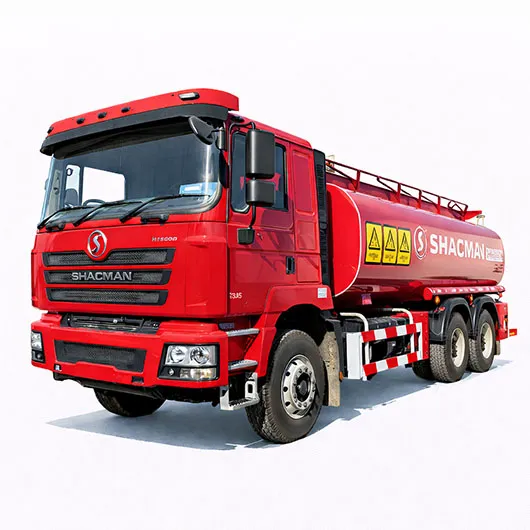
А SHACMAN Automobile 20m³ Fuel Tanker Truck is a heavy-duty tanker built for safe, efficient fuel distribution. On All Lifecycle’s product page, it is positioned for long-distance fuel logistics, with optional Weichai or Cummins power, a 20 m³ tank, optional compartment design, aluminum alloy fittings, and an integrated dispensing system for stable fuel transfer.
If you buy trucks for projects, depots, distributors, or fleet operations, you already know this: the truck itself is only half the decision. The other half is matching the configuration to your routes, fuel type, regulations, and service plan. That is where All Lifecycle tries to stand out. The company presents itself as a China-based export-oriented truck supplier working with brands such as Shacman and Sinotruk, while also offering new and high-quality used trucks, customization, export handling, and after-sales support for overseas B2B buyers.
Why is the SHACMAN 20m³ fuel tanker truck attractive to overseas buyers?
The biggest reason is fit. A good fuel tank truck must carry liquid cargo safely, stay balanced on real roads, and support efficient unloading at the destination. The product page describes this model as a purpose-built fuel transportation solution for safe, efficient, and precise delivery of petroleum products, especially in long-distance distribution and bulk fuel logistics.
I also think buyers like clear, practical configurations. This shacman model is not presented as a flashy concept. It is shown as a working automobile for real fleet tasks: stable handling, accurate dispensing, and corrosion-resistant tank components. That is exactly what importers and project buyers usually care about most.
For B2B customers, flexibility matters too. All Lifecycle states that it supplies both new trucks and high-quality used trucks for global markets, which helps buyers combine budget control with fleet planning. For a distributor or contractor, that can mean pairing one new tanker with one used sinotruk howo support truck or adding a refurbished dump truck to the same order.
What makes a 20m³ tanker different from smaller tanker trucks?
Capacity changes the business case. A 20m³ tanker gives buyers a stronger balance between payload and route efficiency than many smaller tanker trucks. On the product page, the tank capacity is clearly stated as 20 m³, which equals about 20cbm or 20 cubic meters, and that directly supports higher-volume fuel distribution work.
In practical terms, more capacity can reduce trip frequency. That matters for fleet operators serving depots, fuel stations, industrial customers, or project sites. A bigger tank truck can move more diesel or other refined products per trip, which can lower labor cost and improve route economics when the roads and regulations allow it. This is especially useful in medium- and long-distance fuel delivery scenarios, which the page specifically highlights.
Of course, bigger is not always better. The right size depends on road width, turning limits, daily delivery pattern, and unloading conditions. But for many professional buyers, a shacman 20m³ model hits the sweet spot between capacity and workable mobility.
Why does the 6×4 SHACMAN truck layout matter for fuel transport?
The product page lists drive type as “as configured,” but the market commonly pairs this kind of model with a 6×4 heavy chassis, and your keyword direction clearly reflects that buying logic. For fuel hauling, a 6×4 layout is widely valued because it gives good balance between load support, stability, and route practicality. Combined with 10 wheels, it usually suits serious road transport without the complexity of the largest configurations.
A liquid load behaves differently from dry cargo. Fuel moves inside the tank under braking, turning, and uneven surfaces. That is why the truck’s axle logic, suspension behavior, and mounting design matter so much. All Lifecycle’s page specifically says the truck has a well-balanced chassis and tanker layout, plus an optimized tanker structure and mounting design to improve stability and safety when carrying liquid fuel.
For many buyers, that makes a shacman truck like this more practical than forcing a smaller 4×2 into work it was not built for. A 4×2 might suit lighter regional service, but a serious fuel tanker truck for bulk delivery often needs stronger support. At the same time, some fleets may later scale into 8×4 or semi trailer tanker systems when route density and volume grow.
What tank structure and fuel system details should buyers check first?
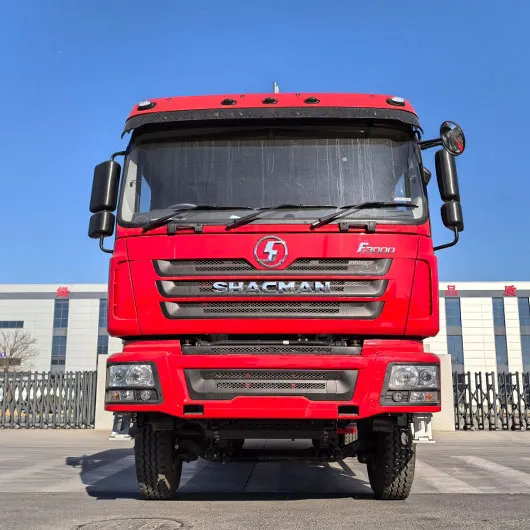
This is where a professional tanker proves its value. All Lifecycle highlights several key system details: optional compartmentalized tank design, 20-inch aluminum alloy manhole covers, aluminum alloy subsea valves, fuel nozzles, flow meters, and a copper gear oil pump. Those are not decorative specs. They directly shape sealing reliability, corrosion resistance, dispensing accuracy, and long-term service performance.
The optional compartment design is especially useful. It lets operators transport multiple fuel types at once. For example, one buyer may need diesel in one section and another refined product in another. That improves route flexibility and helps the same tank truck serve mixed delivery needs.
I always tell buyers to study what happens inside the tank, not just outside it. Tank segmentation, sealing design, manhole access, and valve quality all affect safety and operating efficiency. If you move oil fuel, gasoline, or other petroleum products daily, those details are where maintenance cost and delivery accuracy are won or lost.
Key tank and fuel system items
- Optional compartmentalized tank structure
- 20-дюймовые алюминиевые люки
- Aluminum alloy subsea valve design
- Integrated nozzle and flow meter
- Copper gear oil pump
- Multi-point sealing for leakage prevention
Это SHACMAN 20m³ fuel tanker truck only for diesel and gasoline delivery?
No. The page frames it around petroleum products, bulk energy delivery, and refined oils. It specifically mentions gasoline, diesel, and other refined oils in its application section, which shows that the truck is aimed at broader fuel transport, not one narrow liquid only.
That means the truck can fit several roles. It can work as an oil tanker truck for depot-to-station supply. It can act as a refueling truck for equipment fleets. It can support industrial sites that need controlled fuel transfer. In some operations, it may even function almost like a compact fuel truck alternative to larger tanker trucks or trailer systems.
I would not market it as a water truck or any unrelated service body, because this page is clearly written for fuel logistics. But I would absolutely highlight that one properly configured fuel tank truck can help operators refuel stations, machinery, project vehicles, and regional supply points more efficiently.
How does this SHACMAN tanker compare with other heavy truck categories?
This question matters because B2B buyers rarely buy one truck type in isolation. A distributor handling tanker trucks may also stock a cargo truck, dump truck, or crane truck. A contractor may need one fuel tank truck, one mixer truck, and one support tipper in the same quarter. All Lifecycle’s wider site structure reflects exactly that multi-category buying logic.
Compared with a cargo vehicle, this model is purpose-built for liquid handling. Compared with a dump truck, it focuses on sealed transport and precise discharge, not tipping. Compared with a shacman f3000 or sinotruk howo tractor-style haulage setup, it is a self-contained liquid logistics tool rather than a trailer puller.
That broader context actually helps sell the tanker. Buyers like seeing that the same exporter can also support Sinotruk, Shacman, and mixed-fleet sourcing. If one supplier can help with an oil tank truck, a howo 6×4 dump unit, and later a bulk-haul or municipal truck, the relationship becomes more valuable over time.
What customization options matter most for overseas buyers?
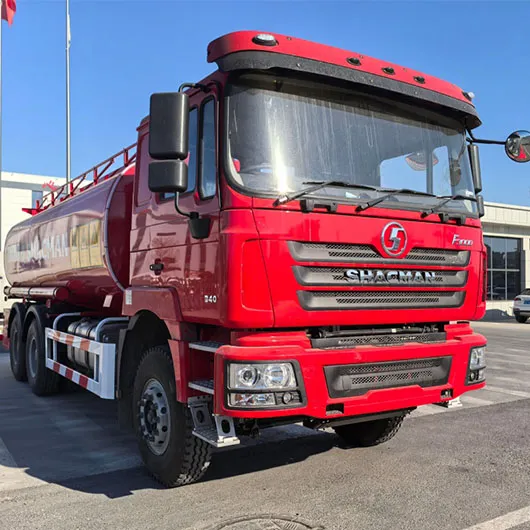
This product page gives one of the clearest answers: engine selection, tank structure, fuel system configuration, material and component selection, and application-oriented setup. In simple terms, the customization options are built around the job, not just cosmetics.
For example, a buyer may want a multi-compartment body, specific emission rules for the destination market, a certain dispensing arrangement, or a different drive type. All Lifecycle explicitly says specifications can be customized according to application, destination regulations, and customer requirements, including drive type, engine power, emission standard, and body configuration.
That is exactly what overseas B2B customers usually ask for. They want the truck to fit local work and local compliance. In my view, that is far more important than generic “best price” language. A tanker truck is engineered to solve a real transport problem, and the right customization is what turns a decent truck into a reliable fuel-delivery asset.
Common buyer requests
- Engine brand and output
- Tank compartment count
- Flow meter and fuel dispenser setup
- Drive layout and market compliance
- Material choices for corrosion resistance
- Поддержка брендирования и экспортной документации
Что должны спросить покупатели перед запросомquotation?
Начните с маршрута и продукта. Скажите экспортеру, что вы будете перевозить, на какое расстояние вы поедете и с какими дорожными условиями столкнется грузовик. В руководстве по заказу на странице специально запрашивается, чтобы покупатели поделились транспортными задачами, средней нагрузкой, дорожными условиями, расстоянием маршрута и местными нормами перед запросом расценок.
Затем спросите о доставке, проверке и поддержке. Все Lifecycle говорит, что он подготавливает грузовики, проводит преддоставочную проверку и предоставляет фотографии загрузки, графики доставки и экспортные документы. В часто задаваемых вопросах также сказано, что фотографии и видео о состоянии грузовика в стиле Шакман предоставляются до отгрузки, и что доступна долгосрочная техническая поддержка и помощь с запасными частями.
Здесь роль экспортера важна так же, как и сам грузовик. Серьезный покупатель ищет не просто грузовик на продажу. Они ищут партнера, который понимает конфигурацию, время экспорта, таможенные документы и как поддерживать работоспособность автомобиля после прибытия.
Контрольный список запросов
- Продукты для перевозки: дизельное топливо, бензин, рафинированные масла или даже некоторые обсуждения по перевозке сырой нефти, где это законно допустимо
- Требуемая емкость и потребности в отсеках
- Требуемый диапазон мощности: 340 л.с., 380 л.с. или другие
- Правила целевого рынка
- Бюджет на доставку и предпочтительный метод
- Необходимость в запасных частях и удаленной поддержке
Почему бизнес-модель All Lifecycle привлекает импортеров и покупателей проектов?
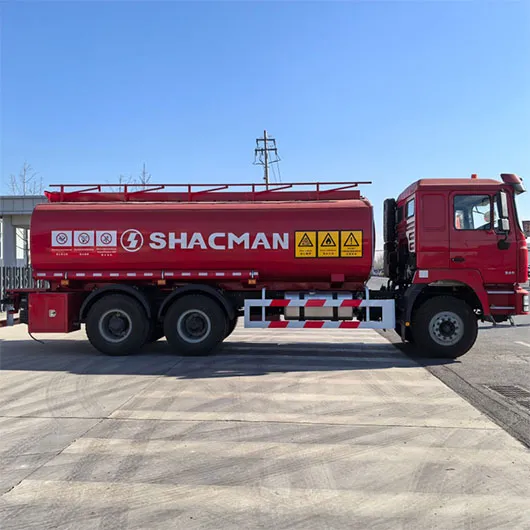
Потому что она уменьшает трение при закупках. В часто задаваемых вопросах указано, что компания является профессиональным поставщиком грузовиков, ориентированных на экспорт в Китае, который работает в тесном сотрудничестве с ведущими производителями, такими как Sinotruk и Шакман, одновременно управляя собственными учреждениями по подготовке грузовиков. Она поставляет как новые, так и высококачественные подержанные грузовики и экспортирует в основном в Африку, Ближний Восток, Юго-Восточную Азию, Центральную Азию и Южную Америку.
Для импортера это означает, что один источник может покрыть несколько категорий грузовиков. Для покупателя проекта это означает больше возможностей объединить новый топливозаправщик Shacman с отремонтированным вспомогательным грузовиком или сравнить установку Шакман с альтернативой Sinotruk Howo. Это очень полезно, когда бюджеты ограничены, но время работы все равно имеет значение.
Я думаю, что это тихая сила предложения. Дело не только в одном продукте грузовика. Дело в том, чтобы помочь покупателю построить работоспособный план автопарка.
Инсайт о кейсах: когда 20м³ танкер имеет больше смысла, чем более крупное единичное устройство?
Представьте себе регионального дистрибьютора топлива, обслуживающего несколько станций на смешанных городских и автомагистральных маршрутах. Огромный прицеп может перевозить больше, но может быть сложнее развертывать, медленнее разгружаться на узких площадках и менее гибким для разнообразных точек доставки. Танк грузовик на 20м³ обычно здесь имеет больше практического смысла.
Теперь представьте себе подрядчика с клиентами в сфере добычи и дорожных работ. Бизнес может использовать один танкер Шакман для регулярной доставки топлива, один самосвал для строительных материалов и, возможно, мини-грузовик или вспомогательное устройство для мелких вспомогательных работ. В этом случае один танкер среднего объема может поддерживать работу остальной части автопарка без накладных расходов от большего трехосного прицепного устройства.
Вот почему многие покупатели не спрашивают только «Какой самый большой танкер?». Они спрашивают: «Какой танкер подходит для моего маршрута и клиентов?» Это более разумный вопрос.
Часто задаваемые вопросы
Что такое автомобиль SHACMAN 20м³ Топливозаправщик в основном используется для?
Он в основном используется для распределения бензина, логистики нефти и доставки рафинированных масел, таких как дизельное топливо и бензин на большие расстояния. На странице продукта он позиционируется специально для безопасной и эффективной транспортировки топлива.
Можно ли кастомизировать этот топливозаправщик для разных рынков?
Да. Все Lifecycle говорит, что грузовик может быть кастомизирован по типу привода, мощности двигателя, стандартам выбросов, структуре бака и конфигурации кузова в зависимости от назначения и целевого рынка.
Поддерживает ли грузовик несколько типов топлива в одном баке?
Да, поддерживает. На странице говорится, что доступен вариант конструкции бака с отсеками, позволяющий одновременно перевозить различные типы топлива.
Почему клапаны из алюминиевого сплава и люки важны?
Они улучшают коррозионную стойкость, надежность уплотнения и эксплуатационную безопасность. Эти пункты специально подчеркиваются в обзоре продукта и техническом разделе.
Продает ли All Lifecycle только новые грузовики?
Нет. В FAQ говорится, что компания поставляет как совершенно новые грузовики, так и высококачественные подержанные грузовики для глобальных рынков.
Как я могу получить цены и рекомендации по автопарку?
На странице продукта указано, что покупатели должны связаться с командой продаж через форму запроса на сайте и предоставить детали применения, количество и страну назначения, чтобы получить точное предложение.
Получить предложение
Мы ответим вам в течение 24 часов. В случае срочных запросов, пожалуйста, добавьте WhatsApp / WeChat: +86 17686600717. Или позвоните напрямую по номеру +86 17686600717.
*Мы уважаем вашу конфиденциальность и защищаем всю информацию.
Мы будем использовать вашу информацию только для ответа на ваш запрос и никогда не будем отправлять нежелательные электронные письма или рекламные сообщения.