











Caminhão Tanque SHACMAN Automobile 20m³: Um Guia Prático de Caminhão Tanque para Transporte de Combustível a Granel
Autor: Alllifecycle
Data de Publicação: 2026-04-02
Choosing the wrong tank truck can lead to leaks, unstable handling, slow unloading, and wasted money. That problem grows fast when routes are long and delivery schedules are tight. The better solution is a purpose-built fuel tanker truck with the right tank system, chassis, and export support.
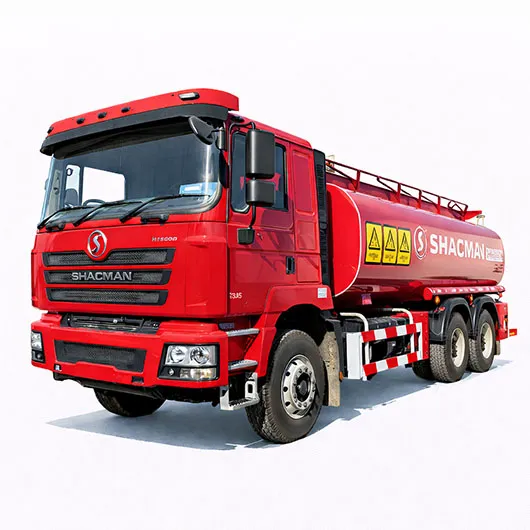
Um SHACMAN Automobile 20m³ Fuel Tanker Truck is a heavy-duty tanker built for safe, efficient fuel distribution. On All Lifecycle’s product page, it is positioned for long-distance fuel logistics, with optional Weichai or Cummins power, a 20 m³ tank, optional compartment design, aluminum alloy fittings, and an integrated dispensing system for stable fuel transfer.
If you buy trucks for projects, depots, distributors, or fleet operations, you already know this: the truck itself is only half the decision. The other half is matching the configuration to your routes, fuel type, regulations, and service plan. That is where All Lifecycle tries to stand out. The company presents itself as a China-based export-oriented truck supplier working with brands such as Shacman and Sinotruk, while also offering new and high-quality used trucks, customization, export handling, and after-sales support for overseas B2B buyers.
Why is the SHACMAN 20m³ fuel tanker truck attractive to overseas buyers?
The biggest reason is fit. A good fuel tank truck must carry liquid cargo safely, stay balanced on real roads, and support efficient unloading at the destination. The product page describes this model as a purpose-built fuel transportation solution for safe, efficient, and precise delivery of petroleum products, especially in long-distance distribution and bulk fuel logistics.
I also think buyers like clear, practical configurations. This shacman model is not presented as a flashy concept. It is shown as a working automobile for real fleet tasks: stable handling, accurate dispensing, and corrosion-resistant tank components. That is exactly what importers and project buyers usually care about most.
For B2B customers, flexibility matters too. All Lifecycle states that it supplies both new trucks and high-quality used trucks for global markets, which helps buyers combine budget control with fleet planning. For a distributor or contractor, that can mean pairing one new tanker with one used sinotruk howo support truck or adding a refurbished dump truck to the same order.
What makes a 20m³ tanker different from smaller tanker trucks?
Capacity changes the business case. A 20m³ tanker gives buyers a stronger balance between payload and route efficiency than many smaller tanker trucks. On the product page, the tank capacity is clearly stated as 20 m³, which equals about 20cbm or 20 cubic meters, and that directly supports higher-volume fuel distribution work.
In practical terms, more capacity can reduce trip frequency. That matters for fleet operators serving depots, fuel stations, industrial customers, or project sites. A bigger tank truck can move more diesel or other refined products per trip, which can lower labor cost and improve route economics when the roads and regulations allow it. This is especially useful in medium- and long-distance fuel delivery scenarios, which the page specifically highlights.
Of course, bigger is not always better. The right size depends on road width, turning limits, daily delivery pattern, and unloading conditions. But for many professional buyers, a shacman 20m³ model hits the sweet spot between capacity and workable mobility.
Why does the 6×4 SHACMAN truck layout matter for fuel transport?
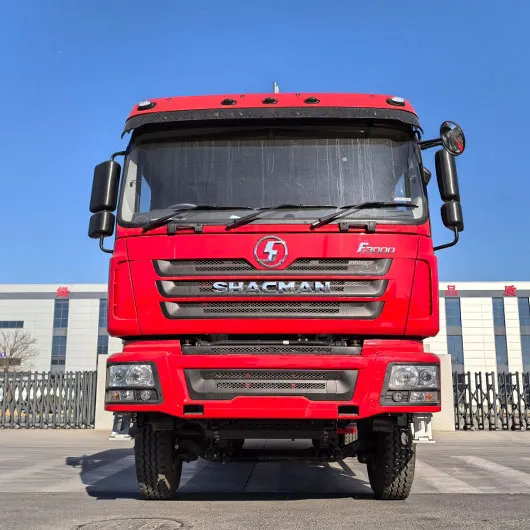
The product page lists drive type as “as configured,” but the market commonly pairs this kind of model with a 6×4 heavy chassis, and your keyword direction clearly reflects that buying logic. For fuel hauling, a 6×4 layout is widely valued because it gives good balance between load support, stability, and route practicality. Combined with 10 wheels, it usually suits serious road transport without the complexity of the largest configurations.
A liquid load behaves differently from dry cargo. Fuel moves inside the tank under braking, turning, and uneven surfaces. That is why the truck’s axle logic, suspension behavior, and mounting design matter so much. All Lifecycle’s page specifically says the truck has a well-balanced chassis and tanker layout, plus an optimized tanker structure and mounting design to improve stability and safety when carrying liquid fuel.
For many buyers, that makes a shacman truck like this more practical than forcing a smaller 4×2 into work it was not built for. A 4×2 might suit lighter regional service, but a serious fuel tanker truck for bulk delivery often needs stronger support. At the same time, some fleets may later scale into 8×4 or semi trailer tanker systems when route density and volume grow.
What tank structure and fuel system details should buyers check first?
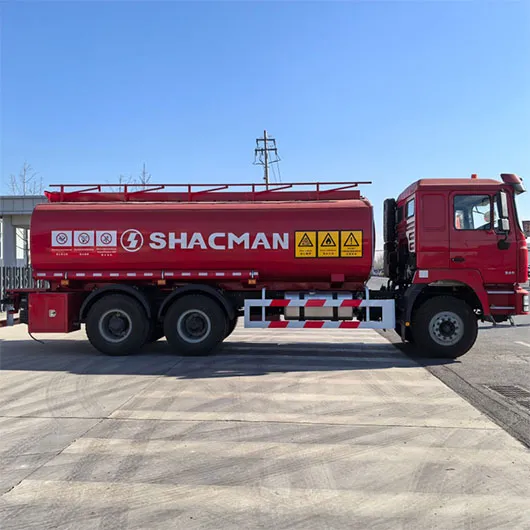
This is where a professional tanker proves its value. All Lifecycle highlights several key system details: optional compartmentalized tank design, 20-inch aluminum alloy manhole covers, aluminum alloy subsea valves, fuel nozzles, flow meters, and a copper gear oil pump. Those are not decorative specs. They directly shape sealing reliability, corrosion resistance, dispensing accuracy, and long-term service performance.
The optional compartment design is especially useful. It lets operators transport multiple fuel types at once. For example, one buyer may need diesel in one section and another refined product in another. That improves route flexibility and helps the same tank truck serve mixed delivery needs.
I always tell buyers to study what happens inside the tank, not just outside it. Tank segmentation, sealing design, manhole access, and valve quality all affect safety and operating efficiency. If you move oil fuel, gasoline, or other petroleum products daily, those details are where maintenance cost and delivery accuracy are won or lost.
Key tank and fuel system items
- Optional compartmentalized tank structure
- Tampas de manhole de liga de alumínio de 20 polegadas
- Aluminum alloy subsea valve design
- Integrated nozzle and flow meter
- Copper gear oil pump
- Multi-point sealing for leakage prevention
É o SHACMAN 20m³ fuel tanker truck only for diesel and gasoline delivery?
No. The page frames it around petroleum products, bulk energy delivery, and refined oils. It specifically mentions gasoline, diesel, and other refined oils in its application section, which shows that the truck is aimed at broader fuel transport, not one narrow liquid only.
That means the truck can fit several roles. It can work as an oil tanker truck for depot-to-station supply. It can act as a refueling truck for equipment fleets. It can support industrial sites that need controlled fuel transfer. In some operations, it may even function almost like a compact fuel truck alternative to larger tanker trucks or trailer systems.
I would not market it as a water truck or any unrelated service body, because this page is clearly written for fuel logistics. But I would absolutely highlight that one properly configured fuel tank truck can help operators refuel stations, machinery, project vehicles, and regional supply points more efficiently.
How does this SHACMAN tanker compare with other heavy truck categories?
This question matters because B2B buyers rarely buy one truck type in isolation. A distributor handling tanker trucks may also stock a cargo truck, dump truck, or crane truck. A contractor may need one fuel tank truck, one mixer truck, and one support tipper in the same quarter. All Lifecycle’s wider site structure reflects exactly that multi-category buying logic.
Compared with a cargo vehicle, this model is purpose-built for liquid handling. Compared with a dump truck, it focuses on sealed transport and precise discharge, not tipping. Compared with a shacman f3000 or sinotruk howo tractor-style haulage setup, it is a self-contained liquid logistics tool rather than a trailer puller.
That broader context actually helps sell the tanker. Buyers like seeing that the same exporter can also support Sinotruk, Shacman, and mixed-fleet sourcing. If one supplier can help with an oil tank truck, a howo 6×4 dump unit, and later a bulk-haul or municipal truck, the relationship becomes more valuable over time.
What customization options matter most for overseas buyers?
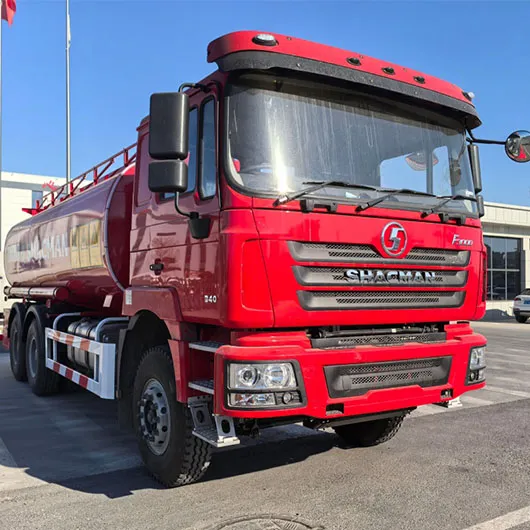
This product page gives one of the clearest answers: engine selection, tank structure, fuel system configuration, material and component selection, and application-oriented setup. In simple terms, the customization options are built around the job, not just cosmetics.
For example, a buyer may want a multi-compartment body, specific emission rules for the destination market, a certain dispensing arrangement, or a different drive type. All Lifecycle explicitly says specifications can be customized according to application, destination regulations, and customer requirements, including drive type, engine power, emission standard, and body configuration.
That is exactly what overseas B2B customers usually ask for. They want the truck to fit local work and local compliance. In my view, that is far more important than generic “best price” language. A tanker truck is engineered to solve a real transport problem, and the right customization is what turns a decent truck into a reliable fuel-delivery asset.
Solicitações comuns de compradores
- Engine brand and output
- Tank compartment count
- Flow meter and fuel dispenser setup
- Drive layout and market compliance
- Material choices for corrosion resistance
- Apoio à documentação de exportação e branding
O que os compradores devem perguntar antes de solicitar uma cotação?
Comece pela rota e pelo produto. Diga ao exportador o que você vai transportar, a distância que você vai percorrer e quais as condições das estradas que o caminhão enfrentará. O guia de encomendas na página pede especificamente aos compradores que compartilhem as tarefas de transporte, carga média, condições da estrada, distância da rota e regulamentos locais antes da cotação.
Depois, pergunte sobre envio, inspeção e suporte. A All Lifecycle afirma que prepara os caminhões, realiza inspeção prévia à entrega e fornece fotos de carga, cronogramas de envio e documentos de exportação. O FAQ também afirma que fotos e vídeos sobre a condição do caminhão estilo shacman são fornecidos antes do envio, e que suporte técnico a longo prazo e assistência com peças de reposição estão disponíveis.
É aqui que o papel do exportador é tão importante quanto o próprio caminhão. Um comprador sério não está apenas procurando um caminhão à venda. Eles estão procurando um parceiro que entenda a configuração, o cronograma de exportação, a papelada aduaneira e como manter o veículo funcionando após a chegada.
Lista de verificação da cotação
- Produto a transportar: diesel, gasolina, óleos refinados ou mesmo algumas discussões sobre transferência de petróleo bruto onde legalmente apropriado
- Capacidade do tanque e necessidades de compartimentos
- Faixa de potência requerida: 340hp, 380hp ou outra
- Regras do mercado de destino
- Orçamento de envio e método preferido
- Necessidade de peças de reposição e suporte remoto
Por que o modelo de negócios da All Lifecycle atrai importadores e compradores de projetos?
Porque reduz a fricção de sourcing. O FAQ diz que a empresa é um fornecedor de caminhões profissional orientado para exportação na China que trabalha em estreita colaboração com fabricantes líderes como Sinotruk e Shacman, enquanto também gerencia suas próprias instalações de preparação de caminhões. Fornece tanto caminhões novos quanto usados de alta qualidade e exporta principalmente para a África, Oriente Médio, Sudeste Asiático, Ásia Central e América do Sul.
Para um importador, isso significa que uma fonte pode cobrir múltiplas categorias de caminhões. Para um comprador de projeto, isso significa mais espaço para combinar um novo caminhão tanque shacman com um caminhão de suporte recondicionado ou comparar uma configuração Shacman com uma alternativa sinotruk howo. Isso é muito útil quando os orçamentos são apertados, mas o tempo de atividade ainda importa.
Eu acho que essa é a força silenciosa da oferta. Não se trata apenas de um produto de caminhão. Trata-se de ajudar um comprador a construir um plano de frota viável.
Insights de caso: quando um caminhão tanque de 20m³ faz mais sentido do que uma unidade de frota maior?
Imagine um distribuidor regional de combustível atendendo várias estações em rotas urbanas e rodoviárias misturadas. Um grande trailer pode transportar mais, mas pode ser mais difícil de implantar, mais lento para descarregar em locais apertados e menos flexível para pontos de entrega variados. Um caminhão tanque de 20m³ geralmente faz mais sentido prático aqui.
Agora imagine um empreiteiro com clientes de mineração e obras rodoviárias. O negócio pode operar um caminhão tanque shacman para entregas regulares de combustível, uma caçamba para material do local e talvez uma mini caçamba ou unidade de serviço para trabalhos de apoio menores. Nesse caso, um caminhão tanque de óleo de capacidade média pode manter o resto da frota em movimento sem o overhead de um sistema de trailer de 3 eixos maior.
É por isso que muitos compradores não perguntam apenas “Qual é o maior tanque?” Eles perguntam “Qual é o tanque certo para minha rota e clientes?” Essa é a pergunta mais inteligente.
Perguntas Frequentes
O que é o automóvel SHACMAN Caminhão Tanque de Combustível de 20m³ principalmente utilizado para?
É principalmente utilizado para distribuição de combustível em grande escala, logística de petróleo e entrega de longa distância de óleos refinados, como diesel e gasolina. A página do produto o posiciona especificamente para transporte seguro e eficiente de combustível.
Este caminhão tanque de combustível pode ser personalizado para diferentes mercados?
Sim. A All Lifecycle diz que o caminhão pode ser personalizado pelo tipo de tração, potência do motor, padrão de emissão, estrutura do tanque e configuração da carroceria com base na aplicação e no mercado de destino.
O caminhão suporta múltiplos tipos de combustível em um tanque?
Sim, pode. A página afirma que um design de tanque compartimentado opcional está disponível, permitindo o transporte simultâneo de diferentes tipos de combustível.
Por que as válvulas de liga de alumínio e tampas de manhole são importantes?
Elas melhoram a resistência à corrosão, confiabilidade de vedação e segurança operacional. Esses pontos são especificamente destacados na visão geral do produto e na seção técnica.
A All Lifecycle vende apenas caminhões novos?
Não. O FAQ diz que a empresa fornece tanto caminhões novos quanto usados de alta qualidade para os mercados globais.
Como posso obter preços e recomendações de frota?
A página do produto diz que os compradores devem entrar em contato com a equipe de vendas através do formulário de consulta do site e fornecer detalhes da aplicação, quantidade e país de destino para receber uma proposta precisa.
Solicitar um Orçamento
Nós responderemos dentro de 24 horas. Se for um caso urgente, por favor adicione WhatsApp/WeChat: +86 17686600717. Ou ligue diretamente para +86 17686600717.
*Respeitamos sua confidencialidade e todas as informações estão protegidas.
Usaremos suas informações apenas para responder à sua consulta e nunca enviaremos e-mails não solicitados ou mensagens promocionais.