











Camion-Citerne SHACMAN Automobile 20m³ : Un Guide Pratique pour le Transport de Carburant en Vrac
Choosing the wrong tank truck can lead to leaks, unstable handling, slow unloading, and wasted money. That problem grows fast when routes are long and delivery schedules are tight. The better solution is a purpose-built fuel tanker truck with the right tank system, chassis, and export support.
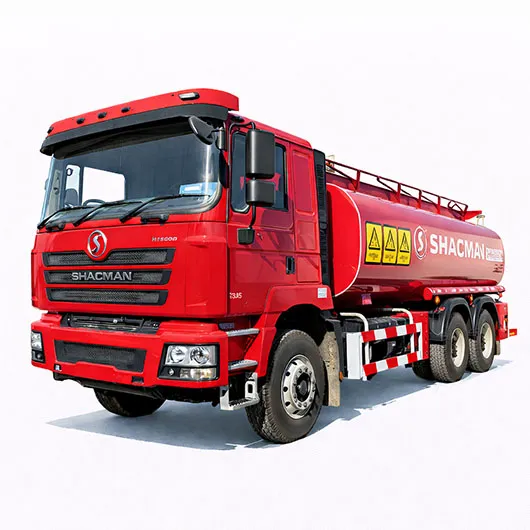
Un SHACMAN Automobile 20m³ Fuel Tanker Truck is a heavy-duty tanker built for safe, efficient fuel distribution. On All Lifecycle’s product page, it is positioned for long-distance fuel logistics, with optional Weichai or Cummins power, a 20 m³ tank, optional compartment design, aluminum alloy fittings, and an integrated dispensing system for stable fuel transfer.
If you buy trucks for projects, depots, distributors, or fleet operations, you already know this: the truck itself is only half the decision. The other half is matching the configuration to your routes, fuel type, regulations, and service plan. That is where All Lifecycle tries to stand out. The company presents itself as a China-based export-oriented truck supplier working with brands such as Shacman and Sinotruk, while also offering new and high-quality used trucks, customization, export handling, and after-sales support for overseas B2B buyers.
Why is the SHACMAN 20m³ fuel tanker truck attractive to overseas buyers?
The biggest reason is fit. A good fuel tank truck must carry liquid cargo safely, stay balanced on real roads, and support efficient unloading at the destination. The product page describes this model as a purpose-built fuel transportation solution for safe, efficient, and precise delivery of petroleum products, especially in long-distance distribution and bulk fuel logistics.
I also think buyers like clear, practical configurations. This shacman model is not presented as a flashy concept. It is shown as a working automobile for real fleet tasks: stable handling, accurate dispensing, and corrosion-resistant tank components. That is exactly what importers and project buyers usually care about most.
For B2B customers, flexibility matters too. All Lifecycle states that it supplies both new trucks and high-quality used trucks for global markets, which helps buyers combine budget control with fleet planning. For a distributor or contractor, that can mean pairing one new tanker with one used sinotruk howo support truck or adding a refurbished dump truck to the same order.
What makes a 20m³ tanker different from smaller tanker trucks?
Capacity changes the business case. A 20m³ tanker gives buyers a stronger balance between payload and route efficiency than many smaller tanker trucks. On the product page, the tank capacity is clearly stated as 20 m³, which equals about 20cbm or 20 cubic meters, and that directly supports higher-volume fuel distribution work.
In practical terms, more capacity can reduce trip frequency. That matters for fleet operators serving depots, fuel stations, industrial customers, or project sites. A bigger tank truck can move more diesel or other refined products per trip, which can lower labor cost and improve route economics when the roads and regulations allow it. This is especially useful in medium- and long-distance fuel delivery scenarios, which the page specifically highlights.
Of course, bigger is not always better. The right size depends on road width, turning limits, daily delivery pattern, and unloading conditions. But for many professional buyers, a shacman 20m³ model hits the sweet spot between capacity and workable mobility.
Why does the 6×4 SHACMAN truck layout matter for fuel transport?
The product page lists drive type as “as configured,” but the market commonly pairs this kind of model with a 6×4 heavy chassis, and your keyword direction clearly reflects that buying logic. For fuel hauling, a 6×4 layout is widely valued because it gives good balance between load support, stability, and route practicality. Combined with 10 wheels, it usually suits serious road transport without the complexity of the largest configurations.
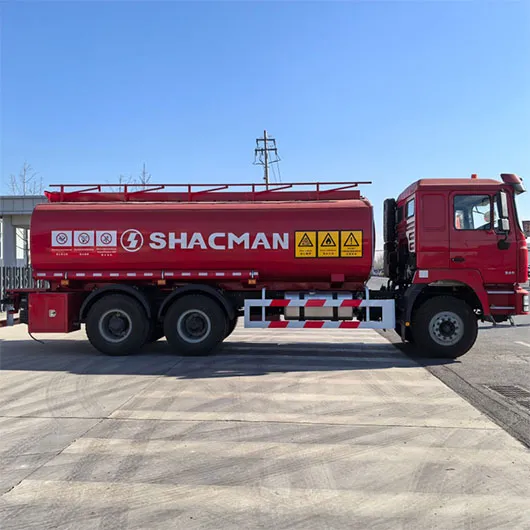
A liquid load behaves differently from dry cargo. Fuel moves inside the tank under braking, turning, and uneven surfaces. That is why the truck’s axle logic, suspension behavior, and mounting design matter so much. All Lifecycle’s page specifically says the truck has a well-balanced chassis and tanker layout, plus an optimized tanker structure and mounting design to improve stability and safety when carrying liquid fuel.
For many buyers, that makes a shacman truck like this more practical than forcing a smaller 4×2 into work it was not built for. A 4×2 might suit lighter regional service, but a serious fuel tanker truck for bulk delivery often needs stronger support. At the same time, some fleets may later scale into 8×4 or semi trailer tanker systems when route density and volume grow.
What tank structure and fuel system details should buyers check first?
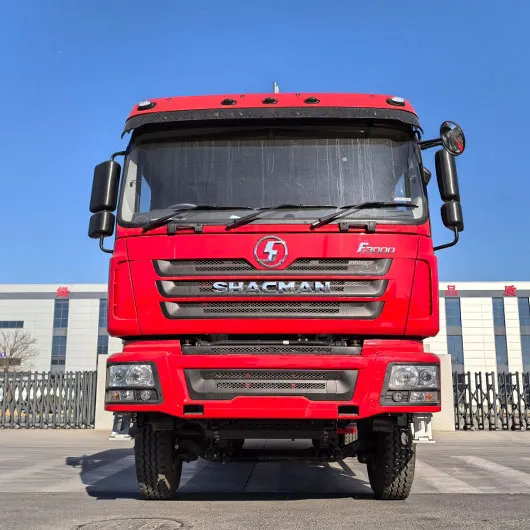
This is where a professional tanker proves its value. All Lifecycle highlights several key system details: optional compartmentalized tank design, 20-inch aluminum alloy manhole covers, aluminum alloy subsea valves, fuel nozzles, flow meters, and a copper gear oil pump. Those are not decorative specs. They directly shape sealing reliability, corrosion resistance, dispensing accuracy, and long-term service performance.
The optional compartment design is especially useful. It lets operators transport multiple fuel types at once. For example, one buyer may need diesel in one section and another refined product in another. That improves route flexibility and helps the same tank truck serve mixed delivery needs.
I always tell buyers to study what happens inside the tank, not just outside it. Tank segmentation, sealing design, manhole access, and valve quality all affect safety and operating efficiency. If you move oil fuel, gasoline, or other petroleum products daily, those details are where maintenance cost and delivery accuracy are won or lost.
Key tank and fuel system items
- Optional compartmentalized tank structure
- Couvercles de trappe en alliage d'aluminium de 20 pouces
- Aluminum alloy subsea valve design
- Integrated nozzle and flow meter
- Copper gear oil pump
- Multi-point sealing for leakage prevention
Est-ce que le SHACMAN 20m³ fuel tanker truck only for diesel and gasoline delivery?
No. The page frames it around petroleum products, bulk energy delivery, and refined oils. It specifically mentions gasoline, diesel, and other refined oils in its application section, which shows that the truck is aimed at broader fuel transport, not one narrow liquid only.
That means the truck can fit several roles. It can work as an oil tanker truck for depot-to-station supply. It can act as a refueling truck for equipment fleets. It can support industrial sites that need controlled fuel transfer. In some operations, it may even function almost like a compact fuel truck alternative to larger tanker trucks or trailer systems.
I would not market it as a water truck or any unrelated service body, because this page is clearly written for fuel logistics. But I would absolutely highlight that one properly configured fuel tank truck can help operators refuel stations, machinery, project vehicles, and regional supply points more efficiently.
How does this SHACMAN tanker compare with other heavy truck categories?
This question matters because B2B buyers rarely buy one truck type in isolation. A distributor handling tanker trucks may also stock a cargo truck, dump truck, or crane truck. A contractor may need one fuel tank truck, one mixer truck, and one support tipper in the same quarter. All Lifecycle’s wider site structure reflects exactly that multi-category buying logic.
Compared with a cargo vehicle, this model is purpose-built for liquid handling. Compared with a dump truck, it focuses on sealed transport and precise discharge, not tipping. Compared with a shacman f3000 or sinotruk howo tractor-style haulage setup, it is a self-contained liquid logistics tool rather than a trailer puller.
That broader context actually helps sell the tanker. Buyers like seeing that the same exporter can also support Sinotruk, Shacman, and mixed-fleet sourcing. If one supplier can help with an oil tank truck, a howo 6×4 dump unit, and later a bulk-haul or municipal truck, the relationship becomes more valuable over time.
What customization options matter most for overseas buyers?
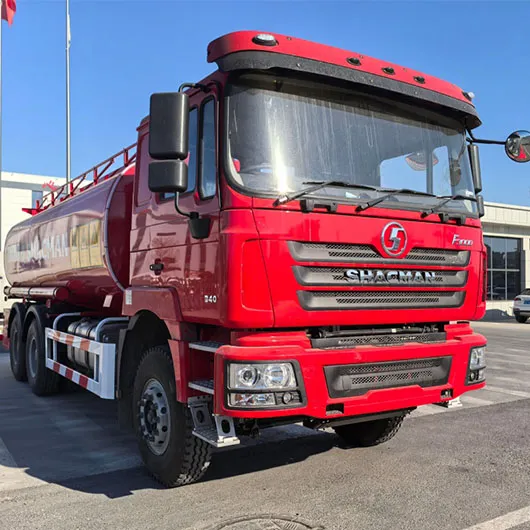
This product page gives one of the clearest answers: engine selection, tank structure, fuel system configuration, material and component selection, and application-oriented setup. In simple terms, the customization options are built around the job, not just cosmetics.
For example, a buyer may want a multi-compartment body, specific emission rules for the destination market, a certain dispensing arrangement, or a different drive type. All Lifecycle explicitly says specifications can be customized according to application, destination regulations, and customer requirements, including drive type, engine power, emission standard, and body configuration.
That is exactly what overseas B2B customers usually ask for. They want the truck to fit local work and local compliance. In my view, that is far more important than generic “best price” language. A tanker truck is engineered to solve a real transport problem, and the right customization is what turns a decent truck into a reliable fuel-delivery asset.
Common buyer requests
- Engine brand and output
- Tank compartment count
- Flow meter and fuel dispenser setup
- Drive layout and market compliance
- Material choices for corrosion resistance
- Soutien à la documentation d'exportation et à l'image de marque
Que doivent demander les acheteurs avant de demander un devis ?
Commencez par la route et le produit. Dites à l'exportateur ce que vous allez transporter, jusqu'où vous allez, et quelles conditions routières le camion va rencontrer. Le guide de commande sur la page demande spécifiquement aux acheteurs de partager les tâches de transport, la charge utile moyenne, les conditions routières, la distance de la route et les réglementations locales avant le devis.
Ensuite, demandez des informations sur l'expédition, l'inspection et le soutien. All Lifecycle indique qu'il prépare les camions, réalise l'inspection avant livraison et fournit des photos de chargement, des calendriers d'expédition et des documents d'exportation. La FAQ indique également que des photos et des vidéos sur l'état des camions de style shacman sont fournies avant l'expédition, et que le soutien technique à long terme ainsi que l'assistance pour les pièces de rechange sont disponibles.
C'est là que le rôle de l'exportateur compte autant que le camion lui-même. Un acheteur sérieux ne cherche pas seulement un camion à vendre. Il recherche un partenaire qui comprend la configuration, les délais d'exportation, les formalités douanières et comment maintenir le véhicule en état de marche après son arrivée.
Liste de contrôle des devis
- Produit à transporter : diesel, essence, huiles raffinées, ou même certaines discussions de transfert de pétrole brut lorsque cela est légalement approprié
- Besoins en capacité de réservoir et en compartiments
- Plage de puissance requise : 340ch, 380ch, ou autre
- Règles du marché de destination
- Budget d'expédition et méthode préférée
- Besoin de pièces de rechange et de support à distance
Pourquoi le modèle commercial d'All Lifecycle attire-t-il les importateurs et les acheteurs de projets ?
Parce qu'il réduit les frictions d'approvisionnement. La FAQ indique que l'entreprise est un fournisseur de camions orienté vers l'exportation en Chine qui travaille en étroite collaboration avec des fabricants leaders tels que Sinotruk et Shacman, tout en gérant ses propres installations de préparation de camions. Elle fournit des camions neufs et des camions d'occasion de haute qualité et exporte principalement vers l'Afrique, le Moyen-Orient, l'Asie du Sud-Est, l'Asie centrale et l'Amérique du Sud.
Pour un importateur, cela signifie qu'une seule source peut couvrir plusieurs catégories de camions. Pour un acheteur de projet, cela signifie plus de possibilités de combiner un nouveau camion-citerne shacman avec un camion de soutien rénové ou de comparer un aménagement Shacman avec une alternative sinotruk howo. Cela est très utile lorsque les budgets sont serrés mais que le temps de fonctionnement reste important.
Je pense que c'est la force discrète de l'offre. Il ne s'agit pas seulement d'un produit de camion. Il s'agit d'aider un acheteur à construire un plan de flotte viable.
Perspective de cas : quand un camion-citerne de 20 m³ a-t-il plus de sens qu'une unité de flotte plus grande ?
Imaginez un distributeur de carburant régional desservant plusieurs stations à travers des itinéraires urbains et autoroutiers mixtes. Une énorme remorque peut transporter plus, mais elle peut être plus difficile à déployer, plus lente à décharger sur des sites étroits et moins flexible pour des points de livraison variés. Un camion-citerne de 20 m³ a souvent plus de sens pratique ici.
Imaginez maintenant un entrepreneur avec des clients dans le secteur minier et des travaux routiers. L'entreprise peut faire fonctionner un camion-citerne shacman pour des livraisons de carburant régulières, un camion benne pour les matériaux de site, et peut-être une mini benne ou une unité de service pour des travaux de soutien plus petits. Dans ce cas, un camion-citerne à capacité moyenne peut maintenir le reste de la flotte en mouvement sans les frais généraux d'un système de remorque à 3 essieux plus grand.
C'est pourquoi de nombreux acheteurs ne demandent pas seulement "Quel est le plus grand camion-citerne ?" Ils demandent "Quel est le bon camion-citerne pour mon itinéraire et mes clients ?" C'est la question la plus judicieuse.
FAQ
Qu'est-ce que l'Automobile SHACMAN Camion-citerne de carburant de 20 m³ principalement utilisé pour ?
Il est principalement utilisé pour la distribution de carburant en vrac, la logistique pétrolière et la livraison à longue distance d'huiles raffinées telles que le diesel et l'essence. La page produit le positionne spécifiquement pour un transport de carburant sûr et efficace.
Ce camion-citerne peut-il être personnalisé pour différents marchés ?
Oui. All Lifecycle dit que le camion peut être personnalisé par type de traction, puissance moteur, norme d'émission, structure du réservoir et configuration de la carrosserie en fonction de l'application et du marché de destination.
Le camion prend-il en charge plusieurs types de carburant dans un seul réservoir ?
Oui, il peut. La page indique qu'un design de réservoir compartimenté en option est disponible, permettant le transport simultané de différents types de carburant.
Pourquoi les vannes et couvercles de trappe en alliage d'aluminium sont-ils importants ?
Ils améliorent la résistance à la corrosion, la fiabilité d'étanchéité et la sécurité d'exploitation. Ces points sont spécifiquement soulignés dans la présentation du produit et la section technique.
All Lifecycle ne vend-il que des camions neufs ?
Non. La FAQ indique que l'entreprise fournit à la fois des camions tout neufs et des camions d'occasion de haute qualité pour les marchés mondiaux.
Comment puis-je obtenir des prix et des recommandations de flotte ?
La page produit indique que les acheteurs doivent contacter l'équipe des ventes via le formulaire de demande sur le site Web et fournir des détails sur l'application, la quantité et le pays de destination pour recevoir une proposition précise.
Obtenir un devis
Nous vous répondrons dans les 24 heures. En cas d'urgence, veuillez ajouter WhatsApp/WeChat : +86 17686600717. Ou appelez directement le +86 17686600717.
*Nous respectons votre confidentialité et toutes les informations sont protégées.
Nous n'utiliserons vos informations que pour répondre à votre demande et n'enverrons jamais de messages électroniques ou promotionnels non sollicités.